Quick Facts
- Top Retirement Pick: Boldin (formerly NewRetirement) for advanced simulation modeling.
- Best for Budgeting: Origin for AI-driven automation and real-time insights.
- Best Free Option: Empower for comprehensive net worth and investment monitoring.
- Best for Privacy: ProjectionLab for local data control and FIRE community modeling.
- Financial Impact: Switching from a 1% AUM advisor fee to software can save the average investor hundreds of thousands over a lifetime.
- Success Metric: According to recent data, 96% of people with a written plan feel confident about their financial future.
The best financial planning software for retirement scenario modeling includes platforms like Boldin and MaxiFi that allow users to simulate complex outcomes for Roth conversions and Social Security timing. For those seeking a daily management solution, AI-driven financial planning software like Origin has transformed budgeting by replacing manual spreadsheets with automated insights and natural-language chatbots that analyze spending patterns in real time.
Why Switch? The 2026 Wealth Management Shift
We are currently witnessing a massive shift in how households manage their money. For decades, the gold standard for financial advice was a human advisor charging a 1% fee on Assets Under Management (AUM). However, as we move into 2026, the landscape has changed. With the $68.4 trillion Great Wealth Transfer underway, a new generation of investors—the "Automation Seekers"—is looking for more efficient, low cost financial planning software for personal use.
The math is simple but startling. On a $1 million portfolio, a 1% fee is $10,000 every single year. Compare that to the $120 to $200 annual cost of modern personal wealth management platforms, and the motivation to switch becomes clear. Beyond the cost savings, these tools handle data synchronization across thousands of institutions via secure Plaid/MX integration, providing a level of accuracy that manual tracking simply cannot match.
Research indicates that the integration of automation and artificial intelligence in modern budget tracking tools can provide up to a 30% improvement in budget accuracy by minimizing manual data entry errors.

1. Boldin: Best for Comprehensive Retirement Planning
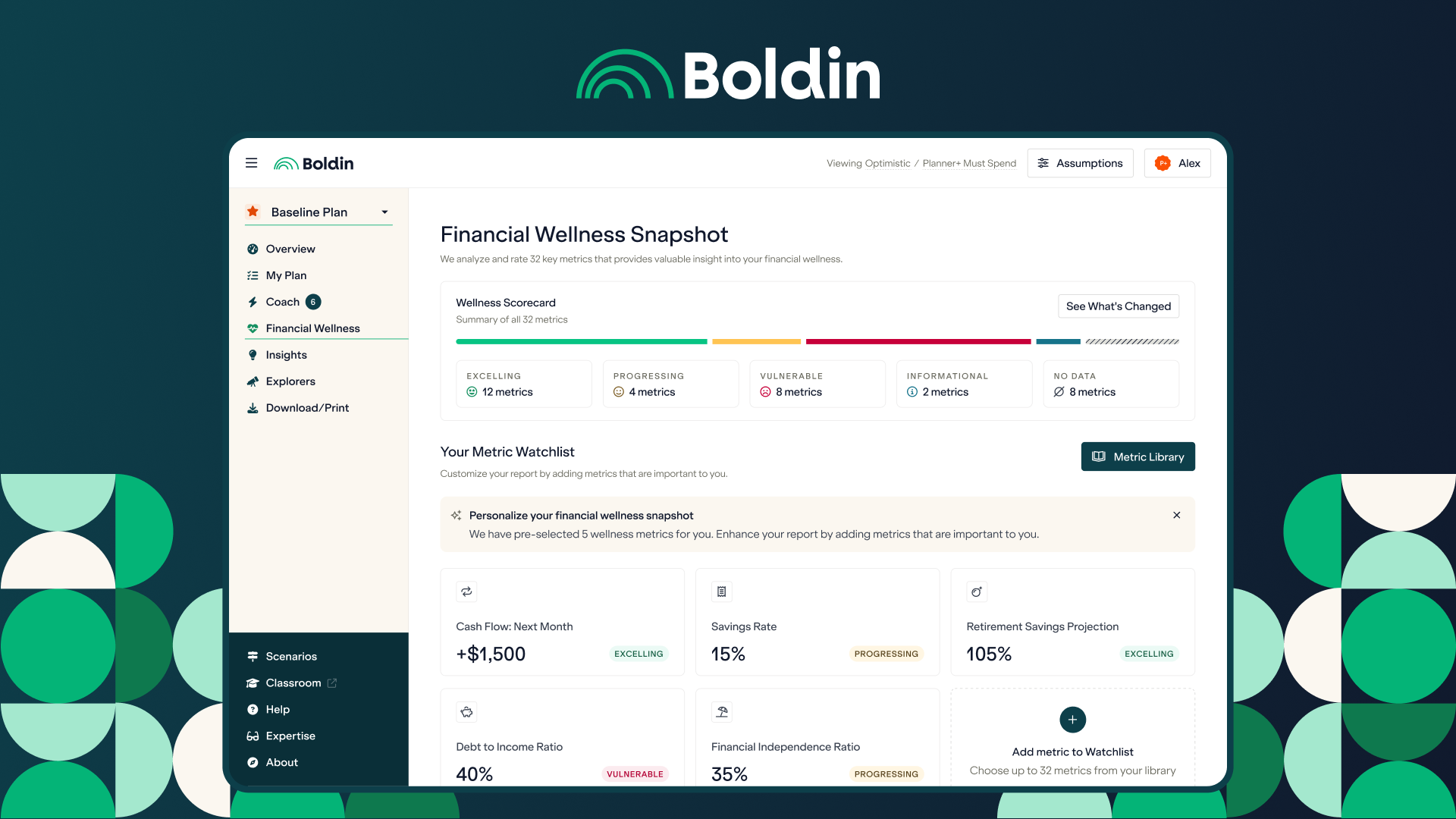
If your primary focus is determining when you can stop working, Boldin is the premier financial planning software for your needs. Specifically designed for those in the "red zone" of retirement (within 10 years of leaving the workforce), Boldin excels at complex financial scenario modeling.
The platform's standout feature is its use of Monte Carlo simulations. Instead of giving you a single static number, it runs your plan through thousands of market volatility scenarios to give you a probability of success. This is essential for withdrawal rate strategies, helping you understand how much you can safely spend without outliving your assets.
At the PlannerPlus tier, which costs approximately $12 per month, users gain access to:
- Roth conversion optimization: Detailed tax planning features that show when it is most efficient to move money into a tax-free bucket.
- Social Security claiming strategies: Tools to model different claiming ages and their long-term impact on your surviving spouse's benefits.
- Estate planning and legacy modeling: Visualizing what you will leave behind after decades of spending.
2. Origin: Best for AI-Driven Daily Budgeting
For many of our readers, the challenge isn't the distant future—it is managing the complexity of today. Origin has positioned itself as the "Financial Command Center" of 2026. This AI-driven financial planning software for daily budgeting utilizes contextual reasoning to understand your lifestyle.
Unlike traditional apps that simply categorize a transaction as "Food," Origin's natural-language chatbot can answer specific questions like, "How much did I spend on streaming subscriptions last year compared to my grocery budget?" It automatically builds budgets based on your history and identifies recurring expenses you may have forgotten.
This automation is vital when you consider that a 2025 survey on personal finance behavior found that while 83.1% of respondents report following a budget, only 20.9% utilize specialized budgeting apps to manage their finances. Origin bridges this gap by removing the friction of manual entry.
| Feature | Description |
|---|---|
| AI Advisor | Real-time answers to complex personal finance questions. |
| Subscription Sync | Automatically identifies and suggests cancellation for unused services. |
| Cash Flow Forecasting | Predicts your bank balance at the end of the month based on bills and income. |
| Emergency Fund Tracking | Monitors your progress toward a 6-month safety net. |
3. Empower: Best Free Personal Wealth Management Platform
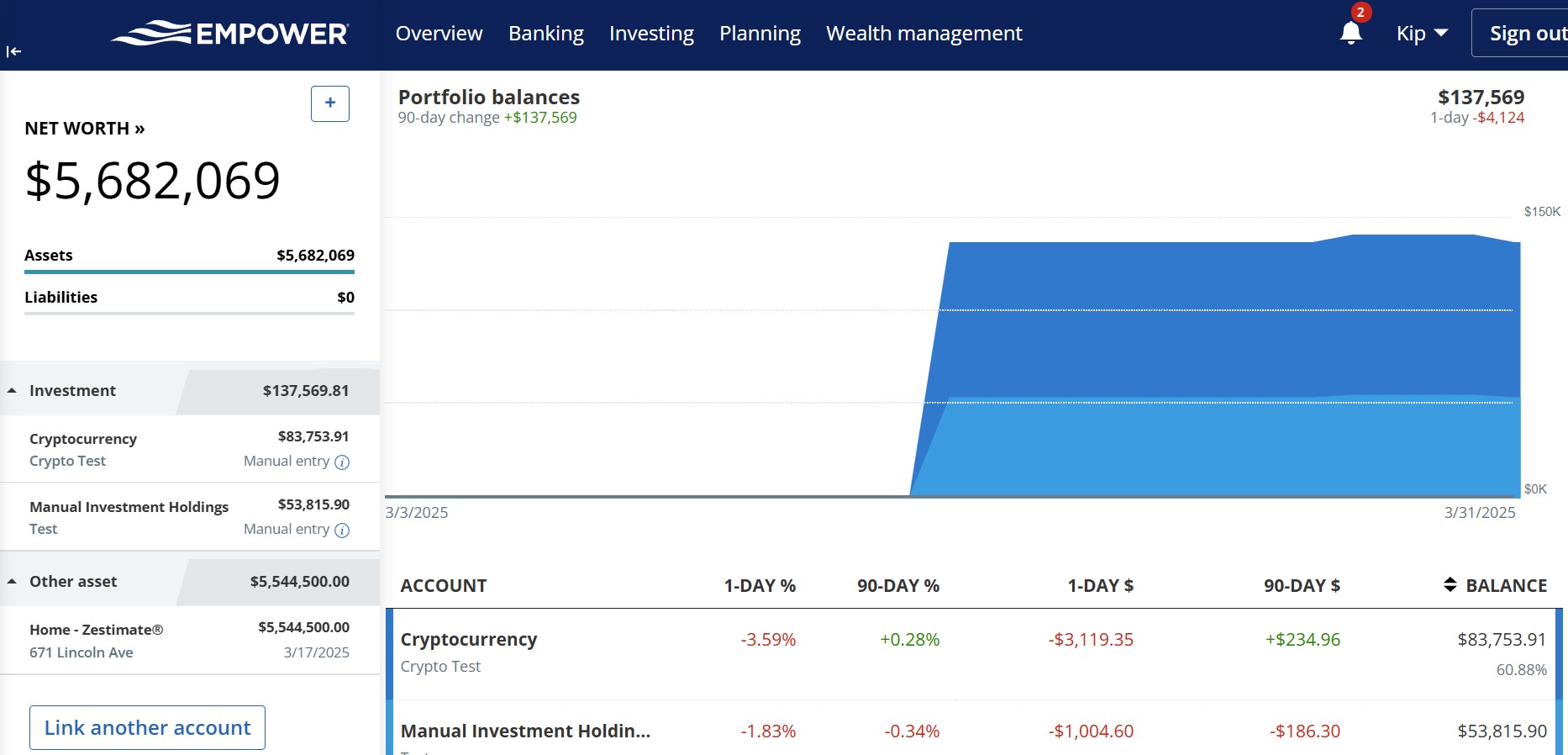
Empower (formerly Personal Capital) remains the gold standard for users who want comprehensive financial planning software for tracking net worth without a monthly subscription fee. While they offer a paid wealth management service, their free dashboard is incredibly robust.
The primary use case for Empower is investment monitoring. It provides a high-level asset allocation review across all your brokerage accounts and 401(k)s. One of its most powerful tools is the portfolio fee analysis. By scanning your mutual funds and ETFs, it reveals the hidden management fees that could be eroding your long-term returns.
We recommend Empower for the "Data Nerd" who wants a clean dashboard view of their total wealth. It provides an excellent investment checkup that identifies if you are over-weighted in one sector or if your risk tolerance assessment suggests you should rebalance.
4. ProjectionLab: The Professional Grade DIY Choice
ProjectionLab has gained a cult following within the Financial Independence, Retire Early (FIRE) movement. It stands out because it offers a level of granular control that few other personal wealth management platforms can match. Crucially, it is built with a focus on privacy, offering local data storage options for those who are hesitant to link their bank accounts to the cloud.
The software uses beautiful Sankey diagrams to visualize how money flows from your income, through your taxes and expenses, and into your various investment buckets. It is the best financial planning software for retirement scenario modeling for people who want to build "what-if" worlds. You can model a scenario where you buy a house in two years, inflation stays at 4%, and you retire at age 45.
Key Advantages of ProjectionLab:
- No forced account syncing: You can choose to enter data manually or use secure API connections.
- Lifetime access option: For a one-time fee of $1,199, you can own the software forever, avoiding the subscription fatigue of 2026.
- Advanced stress testing: Model the impact of a massive market crash or a long-term care event on your financial health.
How to Choose DIY Financial Planning Software
Selecting the right tool depends entirely on your current financial stage. If you are still in the wealth-building phase, a tool focused on cash flow forecasting and debt reduction is key. If you are approaching the finish line, prioritize software that handles tax planning features and withdrawal rate strategies.
When transitioning from spreadsheets to automated financial planning software, look for the "88% drop-off rule." If the software takes more than 12 minutes to set up or requires significant manual adjustments every week, you are 88% more likely to stop using it after the first month. Prioritize tools with high-quality UX and seamless data synchronization.
According to the 2024 Modern Wealth Survey by Charles Schwab, only 36% of Americans have a written financial plan, yet 96% of those with a plan feel confident they will reach their financial goals. Choosing the right tool is the first step toward becoming part of that confident 96%.
FAQ
What is the best financial planning software for beginners?
For those just starting, we recommend Empower or Origin. Empower is free and provides a great bird's-eye view of your net worth, which is highly motivating for beginners. Origin is excellent for those who struggle with the discipline of budgeting because its AI handles the heavy lifting of transaction categorization and insight generation.
How does financial planning software differ from budgeting apps?
Budgeting apps are primarily backward-looking; they tell you where your money went last month. In contrast, financial planning software is forward-looking. It uses your current data to project your path toward long-term goals like retirement, college savings, or buying a home, often incorporating investment growth and tax implications into the math.
Is it safe to link bank accounts to financial planning software?
Most modern platforms use Plaid/MX integration, which is the industry standard for security. These services provide "read-only" access, meaning the software can see your transactions but cannot move your money. Furthermore, many of the tools mentioned use AES-256 encryption, the same level of security used by major global banks.
Can financial planning software help with retirement goals?
Yes, this is where these tools truly shine. By using Monte Carlo simulations and detailed tax models, these platforms help you determine if your current savings rate and investment strategy are sufficient. They can model complex "spending floors" and "spending ceilings" to ensure you maintain a consistent lifestyle throughout your retirement years.
Is financial planning software worth the investment?
When you consider that the average cost is less than $15 a month, the return on investment is often significant. By identifying high investment fees, optimizing your tax strategy, and preventing overspending, these tools can pay for themselves many times over in a single year. More importantly, they provide the peace of mind that comes from having a data-backed plan.