Quick Facts
- Market Trend: Collector car prices saw a 10.2% price decrease between 2023 and 2024, creating a buyer’s market.
- Best Overall: The Mazda Miata (NA and NB) remains the benchmark for reliability and affordability.
- Value Pick: Ford Mustang Fox Body offers high performance for entry-level costs.
- Best Modern Classic: Porsche Cayman S (987.1) provides analog feel with modern reliability.
- Median Entry Price: The current market average for quality entry-level listings is roughly $28,000.
- Pro Tip: Always prioritize a pre-purchase inspection over a low sticker price to avoid automotive restoration traps.
The 2026 collector car market has finally stabilized, offering a unique window for first-time buyers to find affordable classic cars with genuine character and mechanical purity. Whether you are seeking a weekend cruiser or an entry-level classic car with investment potential, current market value trends favor the buyer. The premier choices for affordable classic cars include the Mazda Miata ($8k-$18k) and the Porsche Cayman 987.1 ($25k). Successful first-time buyers focus on buying the best-conditioned model within their budget rather than low-priced project cars to avoid excessive automotive restoration costs.
1. The 2026 Collector Car Market: A Buyer's Window
For the past several years, the collector car world felt like an exclusive club with a rapidly rising cover charge. However, as we move through 2026, we are witnessing what I call the Analog Renaissance—a period where the market has cooled, yet the desire for cars with manual gearboxes and hydraulic steering is stronger than ever. The sub-$40,000 price tier remains the most active segment, accounting for approximately 60% of all listings and secondary market activity. This is excellent news for anyone looking at buying your first vintage car.
This stabilization means you no longer have to panic-buy. You have the luxury of time to research undervalued future classic cars to buy in 2026 and conduct proper due diligence. The shift in market value trends has moved away from speculative flipping toward genuine ownership and enjoyment. Whether you are drawn to Youngtimer automobiles or traditional vintage steel, the focus is now on the "driver-quality" vehicle—cars meant to be driven rather than stored in a vacuum-sealed bubble.
Connecting with automotive enthusiast communities has become more critical than ever. Online auction platforms and local meetups provide a wealth of real-time data on what cars are actually worth today, rather than what they were listed for three years ago. If you are a new collector, your goal shouldn't just be to buy a car; it should be to buy into a lifestyle that matches your mechanical skill level and storage capacity.
2. Top Pick: Mazda Miata (NA/NB Generations)
If there is a gold standard for best entry level classic cars for beginners, it is the first-generation Mazda Miata. Known as the NA (pop-up headlights) and the NB (fixed headlights), these cars exemplify why reliable japanese classic cars from the 1990s are dominating the current market. They were built with a simple, robust philosophy: everything you need for a great drive, and nothing you don’t.
With a total production run of hundreds of thousands of units, parts availability is unparalleled. You can still find OEM components and a massive aftermarket of performance parts, making maintenance straightforward. For a clean NA or NB, you should expect to pay between $8,000 and $18,000 depending on the mileage and service history.
Mechanic's Eyes Checklist: Mazda Miata
- Sill Corrosion: Inspect the rear rocker panels and sills; chassis corrosion here is common and expensive to fix.
- Top Condition: Check for tears in the vinyl or canvas and ensure the rear window (glass or plastic) is clear.
- Short-Nose Crank: On early 1990-1991 models, check for crankshaft pulley wobble, a known failure point.
- Cooling System: Look for a "brown" radiator; the original plastic turns color when it's brittle and ready to burst.
- Service Records: Verification of timing belt and water pump changes every 60,000 miles is vital.
3. Accessible Power: Ford Mustang Fox Body (1979–1993)
If your heart beats for V8 rumble, the Ford Mustang Fox Body is undoubtedly one of the best affordable american muscle cars to collect right now. Its lightweight chassis paired with the legendary 5.0L High Output engine provides a raw, visceral experience that modern Mustangs simply cannot replicate. Because these were so popular for drag racing and modifications, finding an "unmolested" example is the greatest challenge, but the reward is a car that is both fun to drive and easy to wrench on.
The Fox Body is an excellent entry-level classic car because it bridges the gap between old-school carburetors and modern fuel injection. Electronic Fuel Injection (EFI) became standard in 1986, offering better reliability for those who want a classic they can actually start every morning. While high-end Cobra models have skyrocketed in price, a clean GT or LX 5.0 notchback remains within reach for most new collectors.
Mechanic's Eyes Checklist: Ford Mustang Fox Body
- Floor Pan Rust: Check under the carpets and the seat mountings for signs of corrosion or "soft" spots.
- Torque Boxes: In high-powered examples, the rear torque boxes where the suspension mounts can crack or tear.
- Interior Plastics: Ford's 1980s interiors are notoriously fragile; look for missing trim or dashboard cracks.
- Transmission Health: Ensure the T-5 manual shifts smoothly; third gear is usually the first to show wear from aggressive driving.
- Electrical Grounds: Older Fords are prone to quirky electrical issues caused by dirty or loose ground wires.
4. The Modern Classic: Porsche Cayman S (987.1)
Not all collectors want to deal with 40-year-old technology. For those seeking affordable classic sports cars under 25000 dollars, the first-generation Porsche Cayman S (2006–2008) is a masterclass in balance. As part of the modern classics movement, it offers a mid-engine layout, hydraulic steering, and a six-speed manual gearbox that rivals cars triple its price. It is the definition of an analog driving experience wrapped in a reliable, modern package.
Prices for the 987.1 generation have stayed consistent, making it a safe place to park your money while enjoying the drive. However, unlike a Miata, a Porsche requires a more disciplined approach to maintenance and a higher specialized service budget. It is a sophisticated machine that rewards owners who follow a strict preventative maintenance schedule.
Mechanic's Eyes Checklist: Porsche Cayman S
- Bore Scoring: A professional pre-purchase inspection should include a bore scope to check for scuffing on the cylinder walls.
- IMS Bearing: While less common in Caymans than early Boxsters, it is still a point of concern for 2005-2006 models.
- Shift Cables: The factory cables are prone to snapping; many owners upgrade to more durable aftermarket units.
- Water Pump: These are plastic-impeller units that should be replaced every 40,000 to 50,000 miles to prevent overheating.
- Headliner Sag: A common cosmetic issue where the interior fabric begins to droop over time.
5. Classic Appeal: MGB Roadster
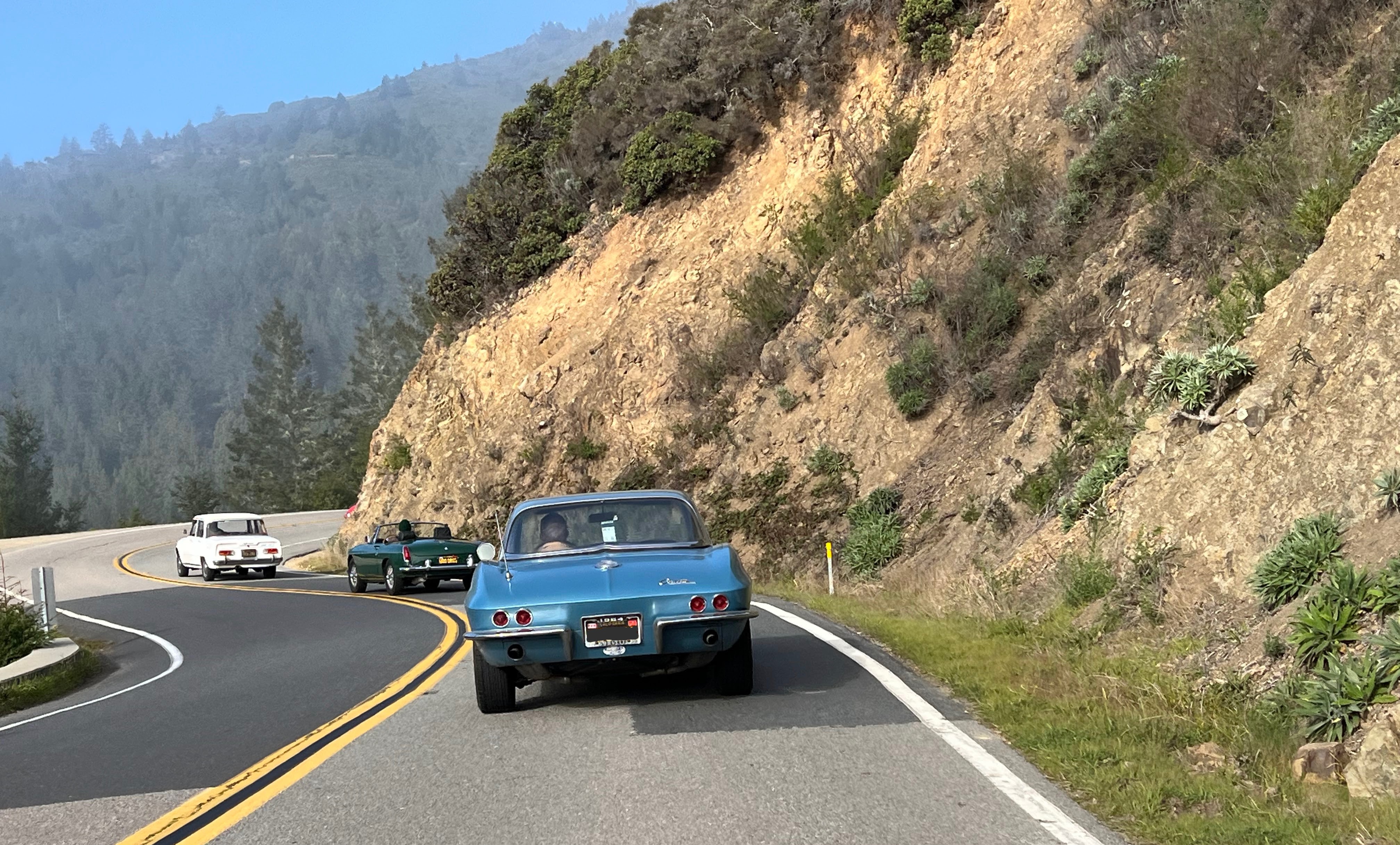
For many, the image of a classic car is a British roadster on a winding country road. The MGB Roadster is the quintessential entry into the world of vintage motoring. With a median price of $8,000 to $15,000 for a driver-quality example, it is one of the most accessible points of entry. Because Mazda used the MGB as inspiration for the Miata, you get that same lightweight, connected feel, but with a true vintage soul.
The beauty of the MGB lies in its simplicity. Almost every part of the car can be repaired with a basic set of tools in your driveway. However, you must be prepared for the "charming" quirks of British engineering, such as the Lucas electrical systems. If you enjoy the process of learning how a car works and don’t mind getting your hands dirty, this is the perfect first vintage car.
Mechanic's Eyes Checklist: MGB Roadster
- Rust in the "Castle" Rails: These are the main structural Box sections of the car; if they are rotted, the car is structurally unsound.
- Oil Pressure: A healthy B-Series engine should show 50-60 psi when warm and under load.
- Overdrive Operation: If the car is equipped with an overdrive unit, ensure it engages and disengages smoothly in 3rd and 4th gear.
- Kingpin Wear: The front suspension requires regular greasing; check for play in the front wheels.
- Electrical Grounding: Many "Lucas" failures are simply poor grounds; check the battery connections and fuse box for corrosion.
6. The True Cost: Maintenance and Logistics
Owning affordable classic cars is a marathon, not a sprint. The sticker price is only the first step. To truly enjoy your car, you must account for the total cost of ownership. Classic car maintenance for beginners is often underestimated. As a general rule, you should set aside a recurring maintenance costs of affordable classic cars budget of $2,000 to $5,000 per year. This covers fluids, tires, and the inevitable small repairs that come with age.
Beyond mechanical repairs, logistics play a huge role. Collector car insurance is often much cheaper than standard insurance, but it usually comes with mileage limits and the requirement that the car is kept in a garage. You must also consider specialized storage. Protecting original paint and chrome from humidity and sunlight is the best way to prevent the need for a future vehicle appraisal that shows a loss in value.
Finally, unless you plan on doing all your own work, you need to find a mechanic you trust. Modern shops are often uncomfortable with carburetors or vacuum-operated systems. Look for specialists within your local automotive enthusiast communities who understand the specific needs of older machinery. This practical guide to buying your first vintage car isn't just about the purchase; it's about the stewardship of the vehicle.
FAQ
What is the most reliable affordable classic car?
The Mazda Miata (NA and NB generations) is widely considered the most reliable entry-level classic. It benefits from Japanese engineering standards of the 1990s, meaning it rarely leaks oil and starts consistently, unlike many European or American cars from an earlier era.
Are classic cars a good investment?
While some cars appreciate significantly, you should view your first classic car primarily as a hobby rather than a high-yield investment. The costs of professional automotive restoration often exceed the car's market value. However, buying a well-maintained, popular model like a Porsche Cayman or a Fox Body Mustang generally protects you from significant depreciation.
Which classic cars are the cheapest to maintain?
Cars with high production numbers, like the Mazda Miata, Ford Mustang, and MGB, are the cheapest to maintain because parts are mass-produced and readily available. The simplicity of their engines also means labor hours at a shop are lower compared to complex luxury classics.
Can I use a classic car as a daily driver?
It is possible, but generally not recommended for beginners. Older cars lack modern safety features like crumple zones and side airbags. Furthermore, the wear and tear of daily traffic can quickly degrade a classic's condition. Using a "modern classic" like a 2000s-era Toyota or Porsche is a more realistic option for daily use.
What makes a car a classic?
While the legal definition varies by state (often 20 to 25 years old for registration), a car becomes a classic when it achieves historical interest or collector appeal. This is often driven by a car's design, its performance, or its cultural significance within the automotive community.
Which classic cars are going up in value?
Currently, the market is showing strong growth in Youngtimer automobiles—cars from the 1980s, 90s, and early 2000s. Specifically, manual-transmission Japanese sports cars and analog European models like the Porsche 987 and BMW E46 are seeing steady interest as younger collectors enter the market.
Final Thoughts for the New Collector
Collecting cars is one of the most rewarding ways to engage with history and engineering. My final piece of advice: don't buy the first car you see. Spend a few weekends attending local Cars and Coffee events, talk to owners, and get a feel for what you truly like. When you do find "the one," never skip a pre-purchase inspection. That $300 to $500 investment is the best money you will ever spend, potentially saving you thousands in automotive restoration costs down the road. Welcome to the club—it’s going to be a great ride.