Quick Facts
- Estimated Yearly Waste: Dirty power causes inefficient appliance performance that can cost homeowners up to $1,000 in excess electricity fees annually.
- Primary Source of Noise: Contrary to popular belief, 80% of power quality disturbances are generated by devices inside the home rather than the utility grid.
- Equipment Longevity: High levels of harmonic distortion can cut the lifespan of major appliances, such as HVAC systems, by nearly 50%.
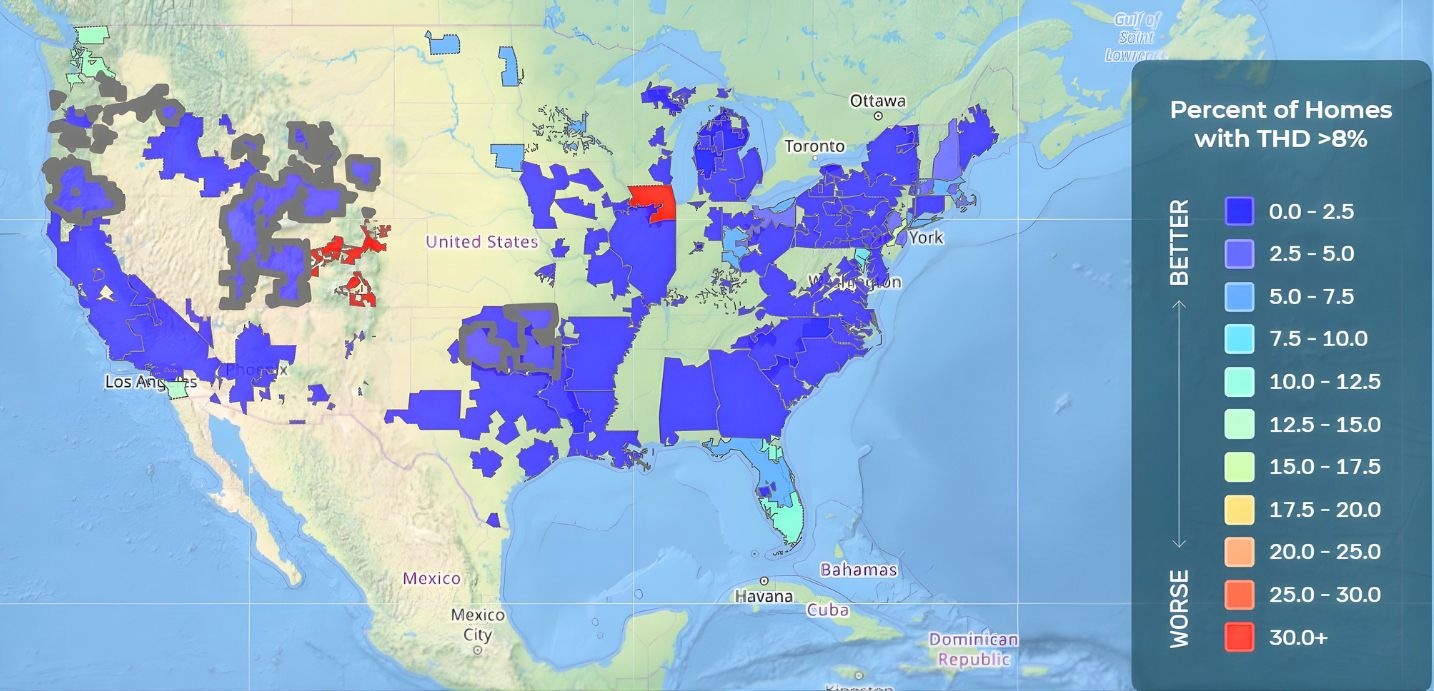
- Safety Benchmark: Homeowners should aim for a Total Harmonic Distortion (THD) level below 6-8% to ensure electrical safety and system efficiency.
- Recommended Hardware: Look for surge protection devices that are UL 1449 3rd Edition compliant with a Voltage Protective Rating (VPR) of 600V or lower.
- Effective Protection: A 3-tier cascading strategy involving the meter, the main breaker panel, and individual outlets provides the most robust defense.
Dirty power refers to electrical abnormalities such as voltage spikes, sags, and harmonic distortion within your home’s wiring. These issues cause appliance motors to vibrate and overheat rather than run efficiently, leading to premature equipment failure and significantly higher electricity bills. Identifying and addressing these issues is the first step toward saving money on energy bills with clean electricity while ensuring your modern electronics remain protected.
The Real Cost of Dirty Power
As a personal finance editor, I often see people obsessing over small changes like switching to generic brand groceries while ignoring massive "hidden drains" in their household budget. One of the most significant yet invisible financial leaks is dirty power. Most of us think of electricity as a steady stream, but in reality, it can be choppy and inconsistent. This inconsistency forces the motors in your refrigerator, air conditioner, and washing machine to work much harder and run hotter than intended.
The financial implications are startling. Research indicates that high levels of harmonic distortion—a common form of dirty power—can increase a household's annual electricity costs by as much as $1,000 because appliances lose efficiency and draw more current to compensate for poor signal quality. When you consider that energy costs have surged over 130% since 2000, and projections for 2026 suggest even more volatility, optimizing your power quality is no longer just a technical hobby—it is a financial necessity.
Beyond the monthly bill, there is the "replacement tax." Dirty power acts like a slow-motion wrecking ball for your electronics. For example, data shows that high harmonics can reduce a standard air conditioner's functional life from 15 years to just seven or eight years. Replacing a multi-thousand-dollar HVAC system twice as often as necessary is a catastrophic blow to any long-term financial plan.

Diagnosis: How to Spot Electrical Noise
Before you can fix the problem, you need to know it exists. Detecting harmonic distortion home electricity issues doesn't always require an electrical engineering degree; often, your house tells you something is wrong through subtle physical cues. If you hear a low, vibratory humming coming from your refrigerator or dishwasher even when they are relatively new, it’s a sign that the motor is struggling with uneven voltage.
You should also look for frequent "bill shock"—months where your usage hasn't changed but your costs have spiked unexpectedly. Other common symptoms of dirty power in household appliances include lights that flicker when the vacuum starts, computers that spontaneously reboot, or smart home devices that frequently lose connection to the Wi-Fi. Many of these issues are dismissed as "ghosts in the machine," but they are usually the result of excessive electrical noise in the wiring.
To take a more scientific approach, I recommend the Measure -> Filter -> Monitor workflow. You can purchase inexpensive plug-in EMI (Electromagnetic Interference) meters that display the amount of noise on a specific circuit. If the numbers are high, you’ll know exactly where to apply filtration. Alternatively, many modern smart home energy monitors can now detect voltage fluctuations and alert you to potential infrastructure issues before they lead to a complete system short-out.

Internal vs. External Sources: Identifying the Culprits
It is easy to blame the utility company when things go wrong, but the reality is much closer to home. According to the Electric Power Research Institute, approximately 80 percent of power quality disturbances are generated within a facility's own electrical system rather than by the utility provider.
Modern life is ironically the biggest cause of the problem. Devices that use "switching power supplies"—like your laptop charger, LED light bulbs, and variable-speed HVAC systems—are designed to be energy-efficient, but they achieve this by rapidly switching the current on and off. This constant switching creates high-frequency transients and electrical noise that backfeeds into your home’s wiring.
External factors do still matter, however. Aging utility grid infrastructure and poor electrical grounding in your neighborhood can introduce voltage sags or spikes. If your home is near an industrial zone or a construction site, large machinery can send "dirty" waves through the lines that reach your doorstep. Distinguishing between internal noise and external spikes is key to choosing the right remediation strategy.
The Three-Tier Solution: Implementing Protection
To effectively reduce electrical noise in wiring and protect your finances, you need a cascading defense strategy. Relying on a single $15 power strip from a big-box store is like trying to stop a flood with a single sandbag. A professional-grade solution involves three distinct tiers of protection.
Tier 1 and Tier 2: The Infrastructure Layer
The first line of defense happens at the point where electricity enters your home. Tier 1 protection is usually installed at the meter by the utility company to stop massive external surges from lightning or transformer failures. Tier 2, however, is where homeowners see the most significant whole house surge protection benefits. This device is installed inside your main breaker panel and serves as a gatekeeper, filtering out spikes before they ever reach your individual room circuits.
| Feature | Type 1 (Meter-Based) | Type 2 (Panel-Based) |
|---|---|---|
| Location | Before the main disconnect | Inside or next to the breaker panel |
| Primary Goal | External lightning/grid surges | Internal noise and external spikes |
| Installation | Utility professional required | Licensed electrician required |
| Noise Filtering | Minimal | High (on premium models) |
Tier 3: Point-of-Use and Dedicated Circuits
Even with a panel protector, internal noise from a hair dryer can still affect a sensitive computer on the same circuit. This is where Tier 3 come in. Using whole house surge protection for electrical noise at the outlet provides the final layer of "polishing" for your power.
For high-end or sensitive electronics, consider the benefits of dedicated circuits for electronics. By running a 20-amp circuit solely for your home office or theater system, you isolate those devices from the "noise" created by your kitchen appliances or HVAC system. If you cannot rewire, learning how to use dirty electricity filters effectively can make a massive difference. These small capacitors plug into outlets and "soak up" high-frequency noise, returning the waveform to a cleaner state.
Hardware Buyer’s Guide: VPR, MCOV, and Ratings
When shopping for protection, don't be swayed by marketing buzzwords. You need to look at the technical specifications on the back of the box. The most important standard is UL 1449 3rd Edition compliance, which ensures the device has been tested under rigorous safety conditions.
Two metrics define how well a protector actually works. First is the VPR (Voltage Protective Rating). This tells you what voltage the device "claps" down to. For a standard 120V home system, you want a VPR of 600V or lower; anything higher allows too much "let-through" voltage to hit your electronics. Second is the MCOV (Maximum Continuous Operating Voltage), which should be at least 150V for a standard outlet to prevent the protector from burning out during minor, non-harmful fluctuations.
Be wary of the "Equipment Protection Policy" printed on many packages. These warranties are notoriously difficult to claim, often requiring you to mail in the damaged device and have a forensic lab prove the surge came through the line. Instead of relying on a theoretical insurance policy, invest in hardware with high kA (kiloampere) ratings—aim for 20kA to 70kA—to ensure the device can survive multiple hits over its lifetime.
FAQ
What is dirty electricity and how does it occur?
Dirty electricity, or dirty power, is a term used to describe abnormalities in the standard 60Hz AC power wave. It occurs when electromagnetic interference or harmonic distortion is introduced into the wiring, often by modern electronics, switching power supplies, and inefficient appliances that "pollute" the electrical lines.
Can dirty power increase my electricity bill?
Yes, significantly. When power is "dirty," motors in appliances like refrigerators and air conditioners run less efficiently. They generate more heat and consume more current to perform the same amount of work, which can increase your annual utility costs by up to $1,000 depending on the severity of the distortion.
What are the symptoms of dirty power in a home?
Common signs include a persistent humming or buzzing sound from appliances, flickering lights (especially when large motors turn on), frequent failure of LED light bulbs, and electronics that glitch or reboot for no apparent reason. You may also notice your devices feel unusually warm to the touch.
How do you fix dirty power issues?
Fixing dirty power involves a multi-step approach: installing a Type 2 surge protector at the main breaker panel, using high-quality EMI filters at the outlet level for sensitive devices, and ensuring your home has proper grounding. For extreme cases, a licensed electrician can install dedicated circuits to isolate sensitive electronics from noisy appliances.
Does a UPS or surge protector stop dirty electricity?
A standard surge protector only stops high-voltage spikes; it does not usually filter out low-level noise or harmonic distortion. A high-quality Uninterruptible Power Supply (UPS) with "double conversion" or "line conditioning" features, however, can clean the power by regenerating a pure sine wave, effectively stopping dirty electricity from reaching your devices.
Modern Financial Stewardship
True financial planning isn't just about where you invest your money; it’s about where you stop losing it. By addressing the invisible waste in your walls, you can protect your high-value assets and reclaim a significant portion of your monthly budget. Transitioning to a clean power strategy is one of the few home improvements that pays for itself through reduced bills and extended appliance life.