Quick Facts
- Market Alert: Upcoming C$5 billion 10-year bond auction scheduled for late May.
- Economic Performance: Canada real gross domestic product (GDP) increased by 0.4% in the first quarter of 2024, reflecting an annualized growth rate of 1.7%.
- Yield Benchmarks: The previous auction for 10-year Government of Canada bonds resulted in an average yield of 3.506%.
- Policy Rate: Bank of Canada maintains its policy rate at 2.25% with a focus on long-term inflation stability.
- Primary Growth Driver: Household spending on services was the primary driver of economic expansion, rising 1.1% in Q1.
- Inflation Outlook: Forecasted peak of approximately 3% in April 2026, with a target return to 2% by early 2027.
- Strategic Risk: Ongoing US-Canada trade tariffs on steel and lumber remain a primary headwind for real return bonds.
The canada bond market is currently at a critical junction. With Q1 GDP growth hitting a projected 1.7% and a massive C$5 billon auction of 10-year Government of Canada bonds underway, investors are navigating significant fixed income volatility. This market alert examines how cooling economic momentum and Bank of Canada monetary policy and bond yields are shaping market expectations and yield concession requirements for institutional and private portfolios.
GDP Momentum and the C$5 Billion 10-Year Auction
We are observing a complex divergence in the Canadian economic landscape that directly impacts how we price sovereign debt. The headline annualized growth of 1.7% looks robust on the surface, but a closer look at the monthly data reveals that momentum stalled in March. For fixed income investors, this flat ending to the quarter suggests that the initial rebound seen in early 2024 may be losing its luster. When economic growth cools, the demand for government debt often shifts as participants weigh the risk of a prolonged slowdown against the immediate supply of new bonds.
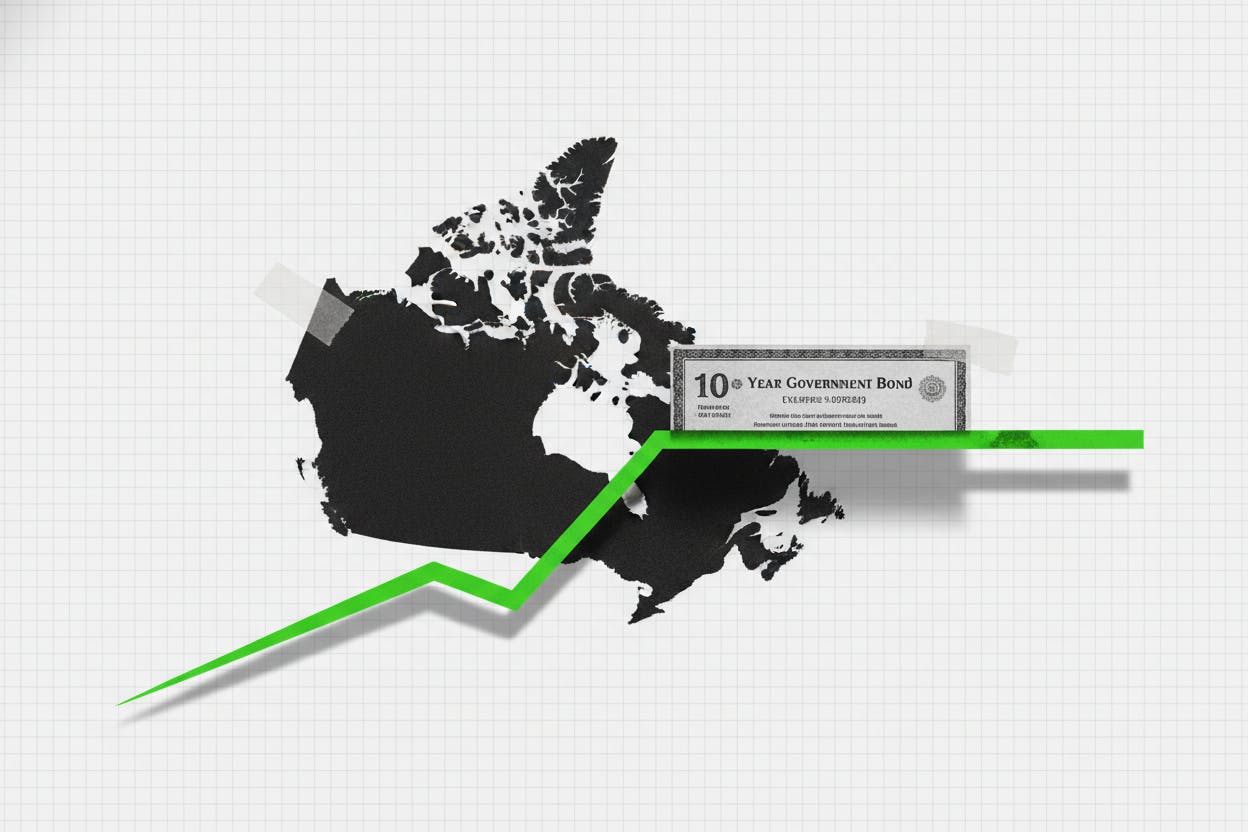
The upcoming C$5 billion auction of 10-year Government of Canada bonds represents a significant liquidity event. Large issuances of this nature frequently trigger what we call yield concessions. Because the market must absorb a vast amount of interest-rate risk at once, yields often rise slightly just before the auction to attract enough buyers. Understanding yield concession tactics for canadian bond investors is essential because these temporary price dips can offer strategic entry points for those looking to lock in higher coupons before the Bank of Canada pivots toward a more accommodative stance.
| Key Macro Indicator | Value / Forecast | Trend |
|---|---|---|
| Q1 GDP (Annualized) | 1.7% | Rebounding |
| March Monthly GDP | 0.0% | Stalling |
| 10Y Yield Forecast (Q-End) | 3.51% | Rising |
| Service Sector Growth | 1.1% | Expanding |
| Current Policy Rate | 2.25% | Neutral |
The volume of this C$5 billion issuance is particularly noteworthy given the current market liquidity constraints. During periods of lower liquidity, the risk premium absorption required by the market increases. This means that provincial and institutional desks may demand a higher spread over the overnight rate to compensate for the volatility. When portfolio strategies for the upcoming bank of canada bond auction are being designed, we must account for the fact that these 10-year notes are the primary transmission channel for long-term mortgage rates and corporate lending benchmarks across the country.
Bank of Canada Monetary Policy and Yield Forecasts
The relationship between Bank of Canada monetary policy and bond yields remains the primary driver of domestic portfolio performance. At the current policy rate of 2.25%, the central bank is attempting to facilitate a soft landing. However, the latest Financial Stability Report highlights that the transmission of high rates is still working its way through the household sector, particularly as mortgage renewals continue to hit at higher levels than five years ago. This ongoing adjustment creates a ceiling for how high yields can go before they begin to severely restrict economic activity.
Market analysts, including those at CIBC, have adjusted their 10Y yield targets to 3.51% by the end of the current quarter. This forecast aligns with the historical pattern where yields rise in anticipation of large supply and then gradually ease over the following 12 months. We expect a subsequent drift toward 3.31% as the market begins to price in the eventual easing of the overnight rate once inflation reaches the 2% target in early 2027.
Maintaining a position in 10-year Government of Canada bonds at these levels requires a belief in the central bank's ability to manage the risk premium absorption without causing a credit crunch. The Bank of Canada Financial Stability Report suggests that while debt-servicing ratios are elevated, the banking system remains resilient. For bondholders, this provides a measure of confidence that the sovereign credit remains a "safe haven," even as fixed income volatility fluctuates in response to Q1 GDP data releases.
External Shocks: Energy Prices and Trade Tariffs
While domestic data drives the short-term news cycle, the canada bond market is highly sensitive to external macro factors. Energy prices, specifically global crude trading near $87.36, continue to exert upward pressure on headline inflation forecasts. Because Canada is a net energy exporter, higher oil prices often strengthen the Canadian dollar, which can complicate the Bank of Canada's attempts to balance domestic growth with import-driven inflation.
We must also categorize risks into two distinct buckets: geopolitical and structural.
Geopolitical Shocks
- Middle East geopolitical risk: Tensions in oil-producing regions can cause sudden spikes in energy costs, forcing the central bank to maintain a hawkish stance for longer than domestic growth would otherwise dictate.
- Global supply chain disruptions: Any renewed friction in manufacturing hubs can reignite goods inflation, delaying the slide of bond yields toward more neutral levels.
Structural Risks
- US-Canada trade tariffs: Renewed discussions regarding tariffs on Canadian steel and lumber threaten the domestic manufacturing and construction sectors. This puts downward pressure on productivity and real GDP, potentially making real return bonds more attractive as a hedge against stagflationary pressures.
- Current account deficit: Shifting trade balances can impact the demand for the Canadian dollar, influencing the yield spread required to attract international buyers to GoC auctions.
The impact of global energy prices on canada bond market inflation forecasts cannot be overstated. If energy stays elevated through 2024, the path to the 2% inflation target becomes much narrower, likely keeping the yield curve in its current state of mild inversion for an extended period.
Strategic Allocation: Rebalancing for the GDP Shift
For long-term investors, the current environment necessitates a tactical approach to duration management. Adjusting canadian bond portfolios for slower gdp growth momentum is no longer a theoretical exercise but a practical necessity based on the flat March GDP reading. If the economy enters a period of stagnation, the long end of the curve typically outperforms as investors bid up the price of long-dated safe assets.
One of the most effective ways to analyze the current landscape is by comparing 2-year and 10-year benchmark bonds for fixed income yields. Currently, the yield curve shows signs of inversion, where shorter-term rates are higher than long-term rates. Historically, this signal indicates that the market expects lower growth and lower interest rates in the future. By moving capital into the 10-year segment during a yield concession bond auction, investors can capture a momentary spike in yields that may not be available once the Bank of Canada begins its rate-cutting cycle.
We also look toward the 2027-2028 horizon, where productivity rebounds are expected to take hold due to broader AI adoption across the Canadian service and financial sectors. This long-term growth prospect suggests that while we may face a cooling period now, the underlying economic engine is being upgraded. Maintaining an allocation to government benchmarks ensures that portfolios stay liquid and ready to pivot as these technological shifts begin to manifest in real gross domestic product figures.
FAQ
What is the current state of the Canadian bond market?
The market is currently navigating a period of supply-side pressure due to large government auctions and softening economic data. While Q1 growth was positive at an annualized rate of 1.7%, the stalling of growth in March has led to increased volatility as investors adjust their expectations for future interest rate paths.
How do interest rates affect the Canadian bond market?
Interest rates and bond prices have an inverse relationship. When the Bank of Canada keeps interest rates high, existing bonds with lower coupons become less attractive, causing their prices to fall and yields to rise. Conversely, if rates are expected to fall due to cooling GDP, investors often buy bonds to lock in current yields, driving prices up.
How does the Bank of Canada influence bond yields?
The Bank of Canada influences yields primarily through its setting of the overnight rate and its communication regarding future policy. Additionally, through the Financial Stability Report and regular press conferences, the bank signals its view on inflation and economic risks, which market participants use to price duration risk into long-term bonds like the 10-year benchmark.
Are Canadian bonds a good investment right now?
For investors seeking capital preservation and steady income, 10-year Government of Canada bonds are currently offering yields near multi-year highs. The potential for yield concessions during large auctions provides a tactical entry point, especially for those who believe the economy will slow down, leading to lower rates and capital appreciation for bondholders in the future.
How do Canadian bond yields compare to US Treasury yields?
Canadian yields often track US Treasury yields due to the close integration of the two economies. However, spreads can widen or narrow based on differences in monetary policy and economic performance. Currently, the Canadian market is showing more sensitivity to domestic cooling, which may cause GoC yields to fall faster than US Treasuries if the US economy remains more resilient.