Quick Facts
- Top Strategy: Institutions are shifting operational liquidity into ESG Money Market Funds (MMFs) and domestic building societies to decouple from high-street banks.
- Key Mover: The University of Cambridge, managing a £4.2 billion endowment fund, is leading a coalition to decarbonize cash holdings.
- Primary Vehicle: A new ESG money market fund managed by Amundi that excludes financial institutions contributing to fossil fuel expansion.
- Capital Shift: A coalition of 80 UK organizations plans to invest nearly £500 million into fossil-free cash vehicles.
- Market Impact: Shifting deposits to ethical money market funds forces traditional banks to use expensive wholesale funding, putting pressure on their Net Interest Margin.
- Approved Alternatives: Vetted institutions include Svenska Handelsbanken and UK building societies like Coventry, Leeds, and Skipton.
To divest from fossil fuel financing, institutions are shifting operational cash into ethical money market funds and building societies to ensure sustainable cash management while maintaining liquidity. By moving hundreds of millions into vehicles like the Amundi ESG money market fund, organizations align their short-term assets with long-term climate commitments without compromising on capital preservation.
The Cambridge Catalyst: A New Blueprint for Divestment
For years, institutional divestment focused almost exclusively on equity portfolios and long-term legacy assets. However, a significant gap remained in the everyday operational cash sitting in high-street banks. The University of Cambridge has fundamentally changed this narrative. By addressing the hundreds of millions of pounds required for day-to-day operations—money usually held in banks like Barclays or HSBC—the university has introduced a new frontier for ESG liquid asset choices.
The scale of this transition is unprecedented. A University of Cambridge-led coalition of approximately 80 UK higher education institutions and organizations is currently moving nearly £500 million into a new 'quasi-money market fund' managed by Amundi. This specific vehicle is designed to exclude any financial firm or company involved in the expansion of fossil fuels. This move is part of the broader Cambridge University Endowment Fund strategy, which has made firm commitments to divest by 2030 from all direct and indirect fossil fuel investments and reach net zero by 2038.
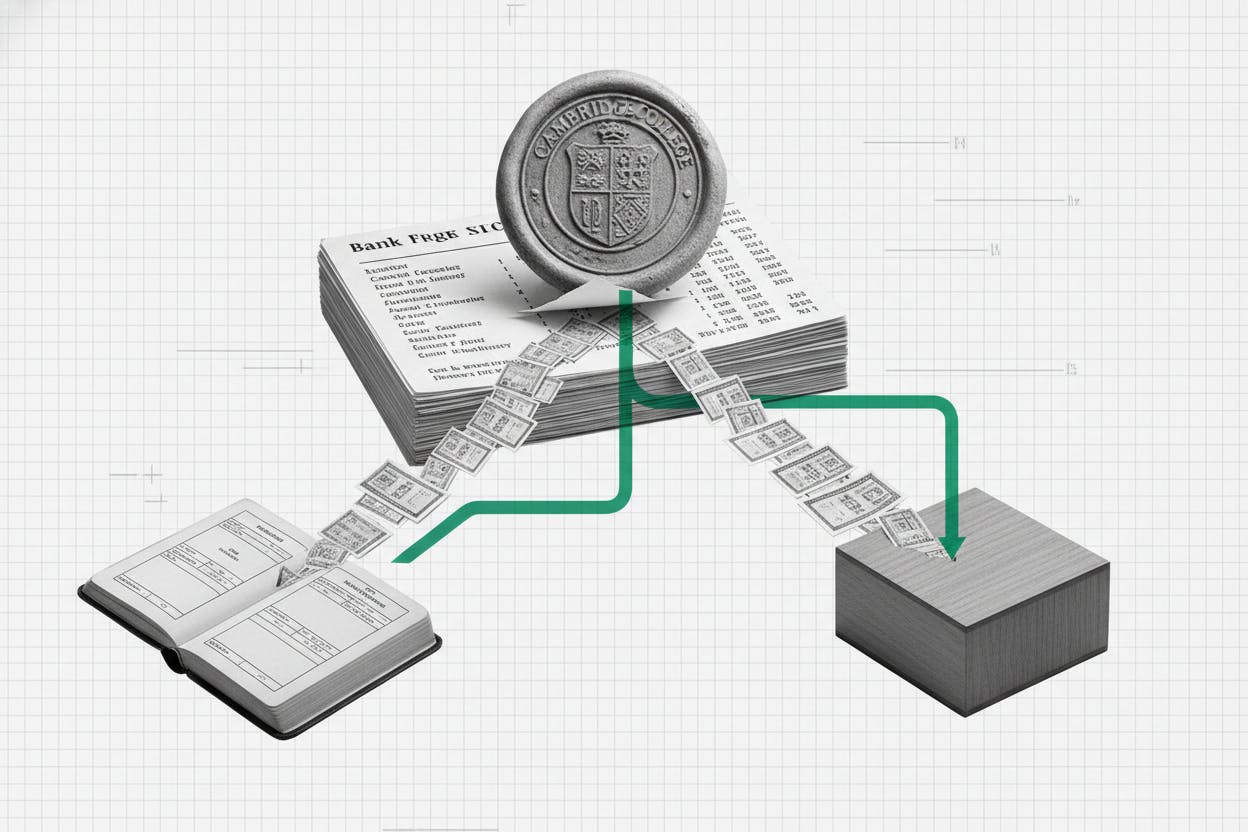
Beyond the specialized funds, Cambridge has reportedly transitioned roughly £135 million of its cash into domestic building societies and smaller institutions. These short-term liquidity divestment options represent a paradigm shift in how treasurers view counterparty risk. Instead of sticking with the "too big to fail" incumbents, they are prioritizing institutions whose lending books are decoupled from carbon-intensive projects. This is more than a moral stance; it is an exercise in managing long-term systemic risk.
Technical Evaluation: Portfolio ESG vs. Structural Sustainability
When a Corporate Treasury evaluates ethical money market funds, they often encounter a challenge: the strict liquidity and safety mandates of a money market fund (MMF) limit the pool of available underlying assets. To overcome this, the industry has developed two distinct ways to achieve sustainability: portfolio-only ESG and structural sustainability.
Portfolio-based ESG focuses strictly on what is inside the fund. It uses exclusion screens to remove companies involved in controversial weapons, tobacco, or fossil fuels. However, because money market funds must hold high-quality, short-term debt usually issued by major banks, a pure exclusion model can sometimes conflict with diversity of counterparty risk. This is where structural sustainability excels.
Sustainable cash management strategies for universities and charities increasingly look at "Inclusive Intermediation." This allows a fund to be classified as "ethical" not just by what it buys, but by how it conducts business. To understand the difference between structural sustainability and portfolio-based ESG in funds, one must look at these three technical layers:
- Broker-Dealer Selection: The fund purposefully uses diverse, minority-owned, or veteran-owned broker-dealers to execute trades, fostering social equity in the financial markets.
- Revenue Sharing: A portion of the advisor revenue or fees is allocated to social or charitable purposes, such as community development programs.
- Issuer Engagement: The fund managers use their massive liquidity pool to pressure banks to improve their own ESG profiles, rather than just boycotting them.
For those conducting a practical treasury review, the Amundi money market fund ESG features overview highlights a "quasi-MMF" structure. This provides the necessary cash-like stability while strictly adhering to a fossil-free whitelist. Treasurers should evaluate these funds based on a 9-factor framework including issuer credit, carbon intensity, board diversity, and operational resilience.
- Credit Quality: Maintaining high ratings (AAAmmf) while selecting sustainable issuers.
- Liquidity Coverage: Ensuring T+0 or T+1 liquidity even with narrowed issuer pools.
- Carbon Footprint: Total CO2 exposure compared to a standard benchmark.
- Intermediary Diversity: The use of social intermediaries in trade execution.
- Transparency: Monthly disclosure of all underlying holdings.
- Screening Rigor: Use of both positive and negative screens for ESG.
- Engagement: Proactive auditing of counterparty lending practices.
- Yield Alignment: Ensuring returns remain competitive with traditional cash.
- Governance: Oversight of the ESG methodology by independent committees.
The Ethical Whitelist: Vetted Banks and Fund Providers
Institutional investors are often surprised to find that some of the best ethical money market funds for institutional divestment aren't actually funds at all, but rather direct deposit relationships with regional lenders. For example, Svenska Handelsbanken is frequently cited as a preferred partner for its Nordic banking model, which emphasizes decentralized decision-making and low-risk lending that avoids large-scale coal or oil projects.
When managing operational cash with building societies vs ESG money market funds, the choice often comes down to the required liquidity window. Building societies usually offer slightly higher yields but might require a 30-day or 95-day notice period, whereas ethical money market funds provide daily access.
| Feature | ESG Money Market Funds | Regional Building Societies |
|---|---|---|
| Liquidity | Same-day (T+0) or Daily (T+1) | Instant access to 95-day notice |
| Diversification | High (dozens of issuers) | Concentrated (single counterparty) |
| Sustainable Mechanism | Structural & Engagement | Organic (lending to local housing) |
| Best For | Operational daily cash flows | Reserve cash and medium-term buffers |
| Primary Risk | NAV fluctuations (rare) | Counterparty concentration |
The Cambridge model has successfully utilized building societies like Coventry, Leeds, and Skipton. These institutions primarily lend to UK residential mortgages, making them low-risk ESG liquid asset choices for short-term liquidity. Because they do not have large investment banking arms, they are naturally insulated from the sectors most frequently targeted by divestment campaigns.
Financial Mechanism: How Divestment Impacts Carbon Financing
A common question from skeptics is whether moving cash actually makes a difference. From a portfolio strategy perspective, the answer lies in the Net Interest Margin (NIM) and the cost of capital.
Banks rely on "sticky" deposits from large institutions and individuals as a cheap source of funding. These deposits are the engine that allows them to lend to long-term projects, including fossil fuel expansion. When a massive entity like the University of Cambridge pulls £500 million, the bank doesn't just lose money; it loses its most stable and low-cost funding source.
To replace this capital, the bank must turn to wholesale funding markets. This type of funding is more expensive and volatile. As more institutions adopt sustainable cash management strategies, the collective pressure forces legacy banks to either increase their lending rates—making fossil fuel projects less economically viable—or improve their ESG profiles to win back the institutional cash.
For boards of directors, justifying these shifts is increasingly seen as part of their Fiduciary Duty. As climate regulations tighten, banks with heavy fossil fuel exposure face higher transition risks and potential stranded assets on their own balance sheets. Therefore, choosing ethical money market funds is not just an ethical preference; it is a move toward operational resilience. Knowing how to move cash from fossil fuel banks to sustainable funds is becoming a core competency for the modern treasurer.
FAQ
What is an ethical money market fund?
An ethical money market fund is a low-risk, highly liquid investment vehicle that invests in short-term debt securities from issuers with high Environmental, Social, and Governance ratings. These funds often use negative screening to exclude sectors like fossil fuels, weapons, or tobacco, while some also utilize social intermediaries or fee-sharing agreements to promote positive social impact.
How do ethical money market funds differ from traditional ones?
While traditional money market funds focus almost exclusively on credit quality and liquidity, ethical versions add a third layer of sustainability criteria. This may involve excluding certain banks based on their lending practices or specifically selecting bonds that fund green projects. Despite these extra layers, they aim to provide similar safety and liquidity as their traditional counterparts.
Are ethical money market funds safe investments?
Yes, they are generally considered very safe, as they must still follow the same strict regulatory requirements as any other money market fund. This includes maintaining high credit ratings for all underlying assets and adhering to maturity limits. However, like any investment in a fund, they are not government-guaranteed and carry some level of market risk.
Do ethical money market funds offer competitive interest rates?
Historically, the returns on ethical money market funds have been very similar to traditional ones. Because they invest in the same universe of high-quality, short-term debt, the yield differential is usually negligible. In some cases, the institutional focus on these funds has led to increased scale, which can help keep management fees competitive.
What criteria are used to define an ethical money market fund?
Criteria usually include several factors: exclusion of fossil fuel financing, carbon footprint reporting, and board diversity of the issuers. Fund managers may also use a 9-factor evaluation framework that looks at inclusive intermediation, where trade execution is handled by diverse broker-dealers, and engagement with banks to change their lending behaviors.
What types of companies do ethical money market funds avoid?
These funds typically avoid companies involved in coal, oil, and gas extraction or infrastructure. Many also exclude firms associated with tobacco production, controversial weapons, gambling, and adult entertainment. Additionally, they may avoid financial institutions that are major lenders to the fossil fuel industry, moving toward a "cleaner" whitelist of banks and building societies.