Quick Facts
- Market Catalyst: The Brazilian health regulator, Anvisa, approved Ozivy, marking the arrival of the first generic semaglutide in a major emerging market.
- Pricing Shift: Entry of generic competitors is expected to drive an estimated 30% price reduction for weight-loss medications in Brazil.
- Production Capacity: The local pharmaceutical giant EMS has upgraded its Sao Paulo facilities to produce up to 40 million pens annually.
- Economic Scale: Brazil's weight-loss drug market is projected to reach R$15.6 billion in 2026, reflecting high metabolic drug demand.
- Revenue Projections: Generic Ozivy is expected to generate more than R$500 million in revenue within its first year of launch.
- Patent Timeline: The definitive expiration of the semaglutide patent in Brazil is set for March 2026, following a landmark court ruling.
Brazil's approval of Ozivy has created a shift in the metabolic drug market. Understanding the Generic Ozempic impact is now vital for pharmaceutical stock risk assessment and broader healthcare sector investment strategies. This move allows insurers and pharmacies to prioritize cheaper alternatives, which impacts the profit margins and stock valuations of major pharmaceutical companies like Novo Nordisk.
The Brazil Patent Cliff: A Global Leading Indicator
For institutional investors, Brazil often serves as a laboratory for the global biosimilar landscape. The recent legal battle over semaglutide—the active ingredient in Ozempic—illustrates why regional regulatory shifts can precede global trends. While Novo Nordisk has successfully employed patent thickets to protect its GLP-1 franchise in the United States until 2032, the legal environment in South America has proven more porous.
The Brazilian Superior Court of Justice rejected a request to extend the patent for semaglutide beyond 2026. This decision effectively created a pharmaceutical patent cliff much earlier than many analysts had initially modeled. By invalidating the extension, the court cleared the way for the Anvisa health regulator to approve Ozivy, the country's first generic semaglutide.
This regulatory divergence highlights a critical component of pharmaceutical stock risk assessment: jurisdictional risk. Investors who focused solely on the U.S. FDA timeline missed the vulnerability of global revenue streams. Brazil represents a significant portion of the emerging market metabolic drug demand, and the early entry of generics there provides a blueprint for how GLP-1 price competition will eventually unfold in more protected markets.
Comparative Patent Expiration Timelines
| Jurisdiction | Patent Status | Expiration Year | Regulatory Environment |
|---|---|---|---|
| Brazil | Expiring | 2026 | Focused on drug affordability and local competition |
| United States | Protected | 2032 | Heavily shielded by secondary patents and thickets |
| European Union | Variable | 2031+ | Subject to individual country health authority negotiations |
Novo Nordisk and the Revenue Margin Compression
The launch of generic GLP-1 drugs signifies a structural shift in the healthcare sector, where regulatory support for biosimilars reduces the pricing power of patent holders. When Anvisa signaled the Ozivy drug launch, the market responded almost immediately with a dip in Novo Nordisk shares. This reaction reflects a deepening concern over revenue margin compression as the "monopoly phase" of the GLP-1 era reaches its zenith.
Novo Nordisk currently faces a high degree of revenue concentration, particularly within the metabolic drug segment. While the company has seen unprecedented growth, the introduction of a generic alternative at a lower price point in Brazil forces a re-evaluation of biopharmaceutical asset valuation. With the local company EMS expected to sell millions of pens at a significant discount, the established pricing floor is beginning to crumble.
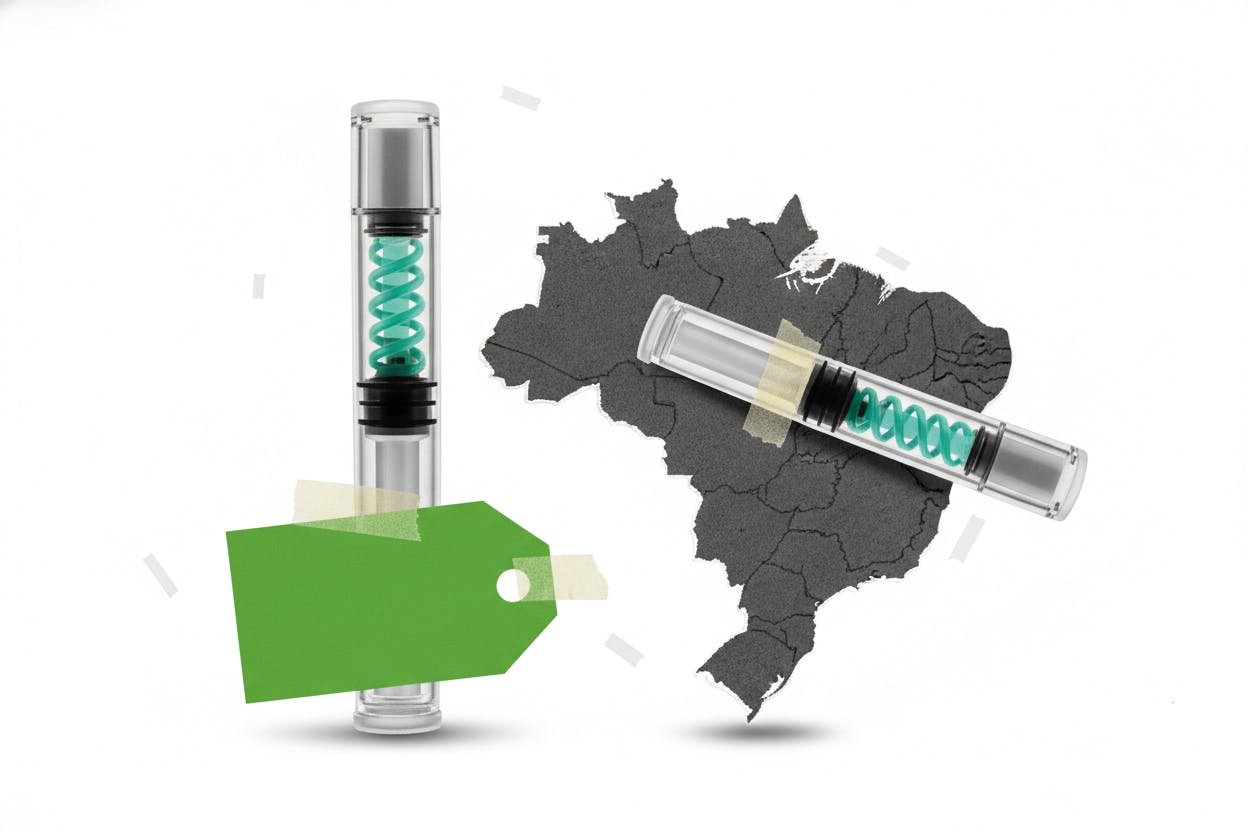
For the long-term investor, the impact of drug price competition on healthcare stock valuation is a double-edged sword. While it creates healthcare equity volatility for the patent holders, it opens up massive revenue streams for regional players. EMS is effectively positioning itself to capture a significant share of the R$15.6 billion market projected for 2026. Management of Novo Nordisk and Eli Lilly must now accelerate their drug pipelines, moving toward more convenient delivery systems to maintain their competitive edge.
Cross-Sector Contagion: Beyond Healthcare
The generic Ozempic impact extends far beyond the pharmaceutical sector. As semaglutide biosimilars become more affordable through generic semaglutide entry, the addressable market for weight-loss drugs expands exponentially. This democratization of the drug creates a "ripple effect" across the consumer staples and discretionary sectors.
As more Brazilians gain access to Ozivy due to the anticipated 30% price reduction, consumption patterns are likely to shift. We are observing early signs of shrinking caloric demand in major urban centers. This has profound implications for:
- Food and Beverage: Companies focused on high-calorie snacks and sugary drinks may see a decline in volume.
- Alcohol Industry: Preliminary data suggests GLP-1 medications can reduce the desire for alcohol consumption.
- Retail Pharmacies: Lower margins on generic drugs may be offset by significantly higher transaction volumes.
Identifying healthcare stocks vulnerable to generic competition is only half the battle; investors must also consider the deflationary pressure these drugs place on the broader food economy. This is a classic example of cross-sector contagion where a medical breakthrough reshapes retail and consumer behavior.
Portfolio Rebalancing: Healthcare ETF Strategies
Given the healthcare equity volatility sparked by the Brazil decision, tactical healthcare ETF strategies amid generic Ozivy launch are becoming essential. Diversification is no longer just about owning different companies; it is about owning different parts of the drug lifecycle.
Strategists are increasingly looking toward healthcare indices that balance "legacy" pharma with companies developing next-generation treatments. A focus on resilient pipelines is key. For example, while injectable semaglutide is facing generic pressure, companies advancing oral semaglutide represent a higher-margin frontier that is harder for generic manufacturers to replicate quickly.
Strategy adjustments should focus on:
- Biosimilar Manufacturers: Looking at the companies that actually produce the generics, such as EMS, which can capitalize on the volume growth.
- Next-Generation Delivery: Prioritizing firms with oral formulations that have a CAGR potential of 35% or more.
- Supply Chain Resiliency: Identifying companies with local production scale, like the 40 million pen capacity in Sao Paulo, which reduces logistics costs and improves margins.
By rebalancing generic Ozempic impact on pharma stock portfolios, investors can move away from concentrated patent risk and toward the broader growth of metabolic health management.
FAQ
Is there a generic version of Ozempic available?
Yes, a generic version of semaglutide known as Ozivy has been approved by the health regulator in Brazil. This marks one of the first major approvals for a generic semaglutide biosimilar in a significant global market, though it is not yet available in the United States.
How does generic semaglutide compare to brand-name Ozempic?
Generic semaglutide, such as Ozivy, contains the same active ingredient as brand-name Ozempic. Because it is a biosimilar, it is required to demonstrate the same efficacy and safety profile through rigorous testing before it can be approved for public use by regulators like Anvisa.
Will a generic version of Ozempic lower the cost of treatment?
The entry of generic competitors typically results in significant cost savings. In Brazil, experts anticipate a price reduction of approximately 30% compared to the branded version, making the medication accessible to a much larger portion of the population.
When is the patent for Ozempic expected to expire?
In Brazil, the patent for semaglutide is set to expire in March 2026. However, in the United States, Novo Nordisk holds various patents that are currently expected to protect the drug from generic competition until 2032, unless further legal challenges succeed.
How does the availability of generics impact Ozempic shortages?
Generics significantly increase the total supply of medication. With companies like EMS capable of producing 40 million pens annually, the availability of generic versions should help alleviate the supply chain shortages that have plagued the branded GLP-1 market for several years.
Will health insurance cover generic versions of semaglutide?
While coverage varies by provider and region, healthcare payers generally prefer generics because they are more cost-effective. As generic semaglutide entry becomes more common, it is highly likely that more insurance plans will include these versions in their formularies to reduce total spend.
Strategic Takeaway for Investors
The ongoing development in Brazil serves as a cautionary tale for those ignoring the pharmaceutical patent cliff. The generic Ozempic impact is not a localized event; it is the first crack in a global pricing wall. For long-term portfolio design, the priority should be identifying companies that can innovate faster than the generic market can copy.
Investors should continue monitoring Novo Nordisk stock performance after generic semaglutide entry as a proxy for how the U.S. market might eventually react. In the meantime, the healthcare sector remains a fertile ground for growth, provided your strategy accounts for the inevitable transition from high-priced blockbusters to high-volume, cost-effective biosimilars. The key is to remain risk-aware and lean into the structural shift toward affordability and wider access.