Quick Facts
- Market Impact: The Caspian Pipeline Consortium manages approximately 1.3 million barrels per day, which accounts for nearly 1% of global oil supply and roughly 80% of Kazakhstan's total crude production.
- The Direct Answer: Yes, energy stocks remain a buy, but the strategy must pivot from broad commodity exposure toward specialized oilfield services and infrastructure with high dividend durability.
- Sector Performance: Following a CPC export terminal halt in late December 2025, the NYSE Arca Energy Index rose by 0.8% and the Energy Select Sector SPDR Fund gained 0.7% as markets priced in reduced supply.
- Production Downturn: In January 2026, disruptions to CPC pipeline operations caused Kazakhstan's oil and gas condensate production to fall by 35% compared to the previous month's average.
- Growth Leader: Oilfield services stocks are outperforming the broader energy sector, supported by a global market projected to exceed $260 billion by 2030.
- Utility Hedge: Regulated utilities and nuclear power site permits are emerging as a stability play for investors wary of Black Sea maritime security and fossil fuel price swings.
The Caspian Pipeline Consortium (CPC) export halt at the Novorossiysk terminal creates a temporary supply bottleneck, affecting major energy players like Chevron and Exxon Mobil. While crude prices may show volatility, investing in energy stocks often yields favorable results as energy equities trade higher on perceived supply risks. Investors are watching the WTI-Brent price spread as an indicator of global logistics constraints that can drive stock selection in the midstream and upstream sectors.
Navigating the Caspian Disruption: Impact on Upstream Majors
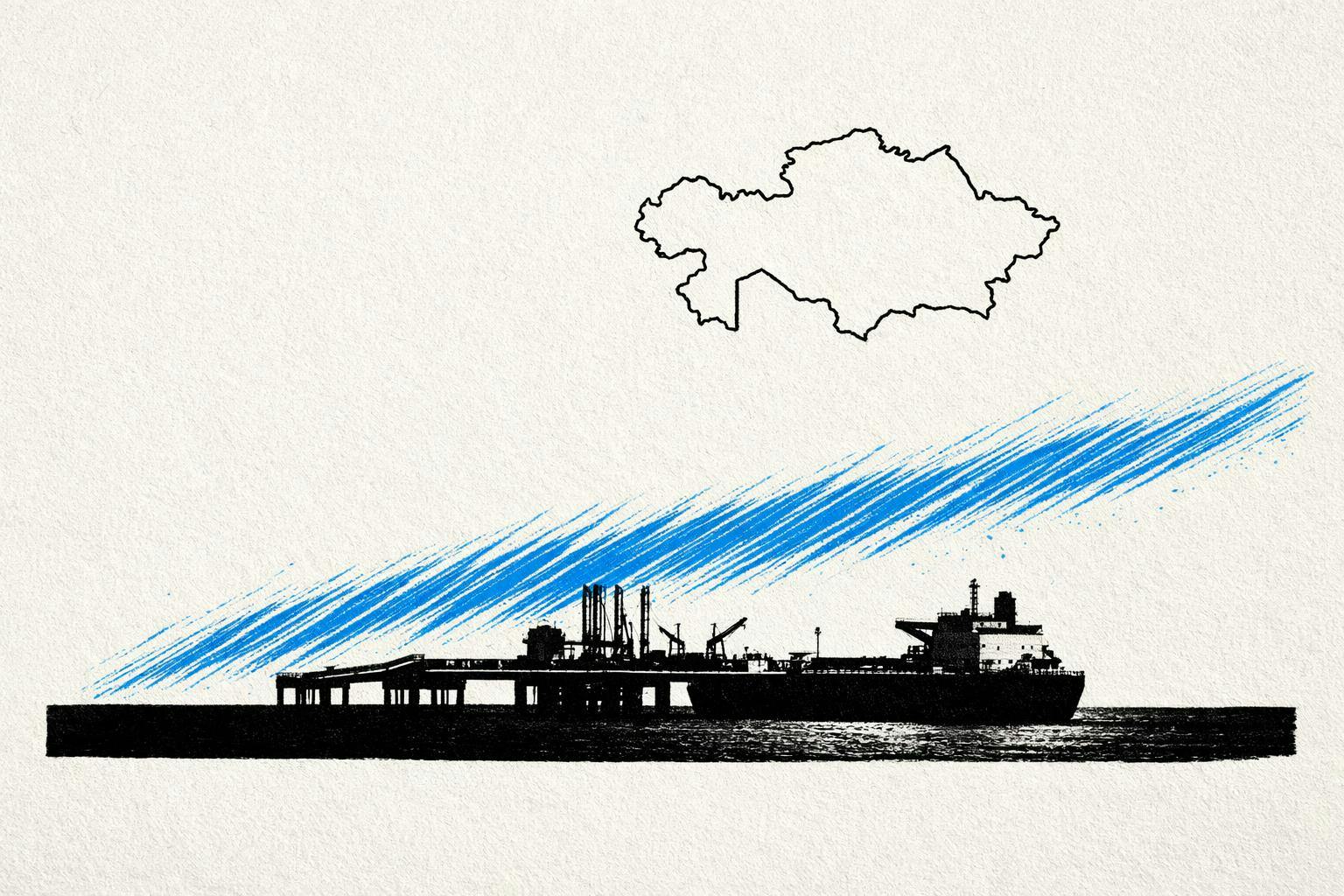
When the Novorossiysk terminal experiences an export pause, the ripple effects are felt instantly across global trading desks. The Caspian Pipeline Consortium is a critical artery for energy security, transporting 1.3 million barrels per day from the massive fields of Western Kazakhstan to the Black Sea. For the long-term investor, this is not just a news headline; it is a fundamental shift in supply-side dynamics.
The immediate consequence of such a halt is a tightening of physical crude markets. Because this pipeline represents about 80% of Kazakhstan's total export capacity, any interruption creates a massive production backlog. We recently observed that disruptions to CPC pipeline operations caused Kazakhstan's oil and gas condensate production to fall by 35% in early 2026. This type of drop forces global refineries to seek alternative grades, often widening the WTI-Brent price spread.
For those assessing caspian pipeline risk for major energy stock holdings, the focus must remain on the resilience of the balance sheet. Major integrated companies like Chevron and Exxon Mobil hold significant stakes in the Tengiz and Kashagan fields. While these companies are diversified, their local production is tethered to the Novorossiysk terminal. However, history shows that during periods of Black Sea maritime security concerns, the market often rewards these majors for their ability to manage complex logistics. A production cost floor near $40 per barrel for top-tier assets provides a significant buffer against temporary outages, ensuring that the dividend stays protected even when the taps are temporarily turned off.
Identifying Second-Order Winners: Oilfield Services & Midstream
While the headlines focus on the oil majors, the real engine room of the current energy trade is the service and infrastructure sector. There is a common misconception that supply halts are universally bad for the industry. In reality, logistical bottlenecks and infrastructure gaps often lead to increased demand for production optimization and wellhead equipment.
Our oilfield services investment analysis suggests that this sub-sector is currently the high-performer of the energy world. Following recent export halts, the Energy Select Sector SPDR Fund gained 0.7%, largely driven by the resilience of service companies. Producers are increasingly spending on technology to extract more from existing wells to compensate for regional transit risks. This trend is fueling the growth of the global oilfield services market, which is now on a trajectory toward a $260 billion valuation by the end of the decade.
When evaluating oilfield services stocks for 2026 growth potential, one must look at firms specializing in offshore and remote onshore drilling. These companies are less sensitive to short-term pipeline drama because their contracts are structured around multi-year exploration cycles. Furthermore, identifying second order winners in the oilfield services sector involves looking at midstream logistics risk. Companies that provide storage and alternative transport routes become invaluable when the main line goes dark. While pure upstream plays may suffer from production shut-ins, the midstream logistics and service sectors capture value through the demand for flexibility.
The Diversification Play: Nuclear Utilities and AI Demand
The 2026 energy landscape is no longer just about oil and gas. As we refine our energy sector investment strategies, we must acknowledge the massive shift toward power generation stability. Regulated utility earnings are becoming a cornerstone for portfolios that want energy exposure without the geopolitical headache of the Black Sea.
A significant driver here is the explosion of AI data centers, which require massive, constant thermal loads. This has led to a 25-year high in natural gas power plant orders and a renewed interest in nuclear power. Major utilities are now aggressively securing nuclear site permits to ensure long-term base-load power. This provides a natural hedge; while fossil fuel prices may swing due to the Caspian Pipeline Consortium risks, the demand for reliable electricity only moves in one direction.
When evaluating energy stock entry points, an investor should consider whether a company is positioned to benefit from this "electrification of everything." A diversified portfolio that balances volatile upstream assets with the steady growth of nuclear-ready utilities provides a much smoother equity curve.
Risk Management for Energy Portfolios in 2026
Prudent investing in energy stocks requires a transition from emotional reactions to logistical analysis. The Black Sea export pause is a reminder that energy security is fragile. Therefore, your portfolio should be built on a foundation of cash flow rather than just commodity price speculation.
The impact of refining capacity closures and capital expenditure declines expected in 2026 means that "big oil" is becoming "yield oil." Instead of spending billions on risky new frontier exploration, companies are returning capital to shareholders. To manage risk management for energy portfolios post-black sea export pause, investors should utilize a matrix that weighs dividend yield against geographical asset concentration.
| Company | Sector Focus | Dividend Yield | Production Risk Level | Strategy Role |
|---|---|---|---|---|
| Chevron (CVX) | Integrated Upstream | ~4.1% | Moderate (CPC Exposure) | Core Yield |
| SLB (SLB) | Oilfield Services | ~2.5% | Low (Diversified) | Growth/Service Play |
| Enbridge (ENB) | Midstream Logistics | ~6.5% | Low (North American) | Defensive Income |
The Straits of Hormuz and the Novorossiysk terminal remain permanent risk factors. However, by focusing on firms with low production costs and high capital discipline, investors can turn these bottlenecks into entry points. The best time to buy energy stocks after cpc export halts is often when the market overreacts to the drop in production volume, forgetting that the long-term demand for energy is inelastic.
FAQ
Is energy a good sector to invest in?
The energy sector remains a vital component of a diversified portfolio because it provides a hedge against inflation and offers some of the highest dividend yields in the market. As global demand for power increases due to industrialization and AI infrastructure, companies across the energy spectrum are seeing improved cash flow profiles and stronger balance sheets than in previous decades.
Is now a good time to buy energy stocks?
Historical data suggests that moments of geopolitical tension or logistical bottlenecks, such as a pipeline halt, often provide attractive entry points. While these events cause short-term volatility, the underlying demand for crude and power remains high. Investors focusing on companies with strong capital discipline and diversified asset bases often find these periods to be a strategic window for long-term positioning.
How do oil prices affect energy stock performance?
While there is a strong correlation between crude prices and energy equities, the relationship is nuanced. Upstream producers are the most sensitive to price swings, whereas midstream companies and oilfield service providers are more dependent on volume and long-term capital expenditure cycles. Even if prices stagnate, many energy stocks can outperform if they maintain low production costs and high shareholder returns.
What are the risks of investing in the energy sector?
The primary risks include geopolitical instability in key transit hubs like the Black Sea, regulatory shifts toward carbon neutrality, and the inherent volatility of commodity prices. Additionally, logistical risks such as pipeline failures or terminal closures can lead to temporary production shut-ins, which can impact the quarterly earnings of companies with concentrated geographic footprints.
Should I invest in energy ETFs or individual stocks?
ETFs are an excellent choice for investors seeking broad exposure to the sector without the idiosyncratic risk of a single company's operational failures. However, individual stock selection allows for a more targeted strategy, such as focusing specifically on the high-growth oilfield services sector or selecting high-yield majors with a track record of dividend growth.