Quick Facts
- Yield Threshold: The 30-year fixed mortgage rate remains anchored around the 6% psychological barrier, dictating buyer movement.
- Investor Profile: Local independent investors currently hold 93.4% of the market share, significantly outperforming institutional buyers in agility.
- Defensive Growth: Data centers and logistics assets are projected to grow 8-10% as nearshoring becomes a standard risk mitigation tactic.
- Cost Drivers: Crude oil price spikes, particularly from Hormuz transit risks, are directly inflating costs for asphalt and vinyl.
- Allocation Target: Institutional models for 2026 suggest a 60:20:20 ratio prioritizing real assets, gold, and neutral global hubs.
- Supply Crunch: The office sector is facing a severe contraction, with completions projected to fall by 75% throughout 2026.
As we navigate 2026, geopolitical real estate risk has evolved from a secondary concern to a primary driver of property valuations. Regional unrest is no longer just a headline; it directly triggers mortgage rate volatility through geopolitical factors and pushes construction costs higher. To protect your wealth, understanding how to mitigate these shocks is essential.
The Indirect Channel: Treasury Yields and Mortgage Rates
The primary transmission mechanism between global conflict and local property markets is the Treasury yield curve. When international unrest flares, investors typically initiate a flight to quality, purchasing U.S. government bonds. While this can temporarily suppress yields, the secondary effect of geopolitical instability is often inflationary. As oil prices rise and supply chains fracture, inflation expectations climb, causing long-term interest rates to decouple from short-term policy rates. For the real estate investor, this creates a environment of persistent mortgage rate volatility that makes long-term planning difficult.
In the 2026 landscape, the 6% interest rate has emerged as a critical psychological and financial threshold. We are observing a profound housing market lock-in effect strategies where existing homeowners, who secured rates between 3% and 4% in previous years, are unwilling to list their properties. This scarcity of inventory keeps prices artificially high even as demand softens due to affordability constraints. Assessing geopolitical real estate risk for private portfolios now requires a deep dive into how these macro shifts affect local liquidity.
Managing interest rate volatility in real estate during conflicts requires recognizing that real estate ceases to be a purely local asset. When sovereign risk increases globally, the liquidity premium on physical property rises. Investors are demanding higher yields to compensate for the uncertainty, leading to cap rate expansion across many traditional sectors. To counter this, savvy managers are shifting toward shorter-term debt instruments or all-cash acquisitions where possible to avoid the friction caused by the volatile bond market.

Supply-Side Shock: Construction Costs and the Strait of Hormuz
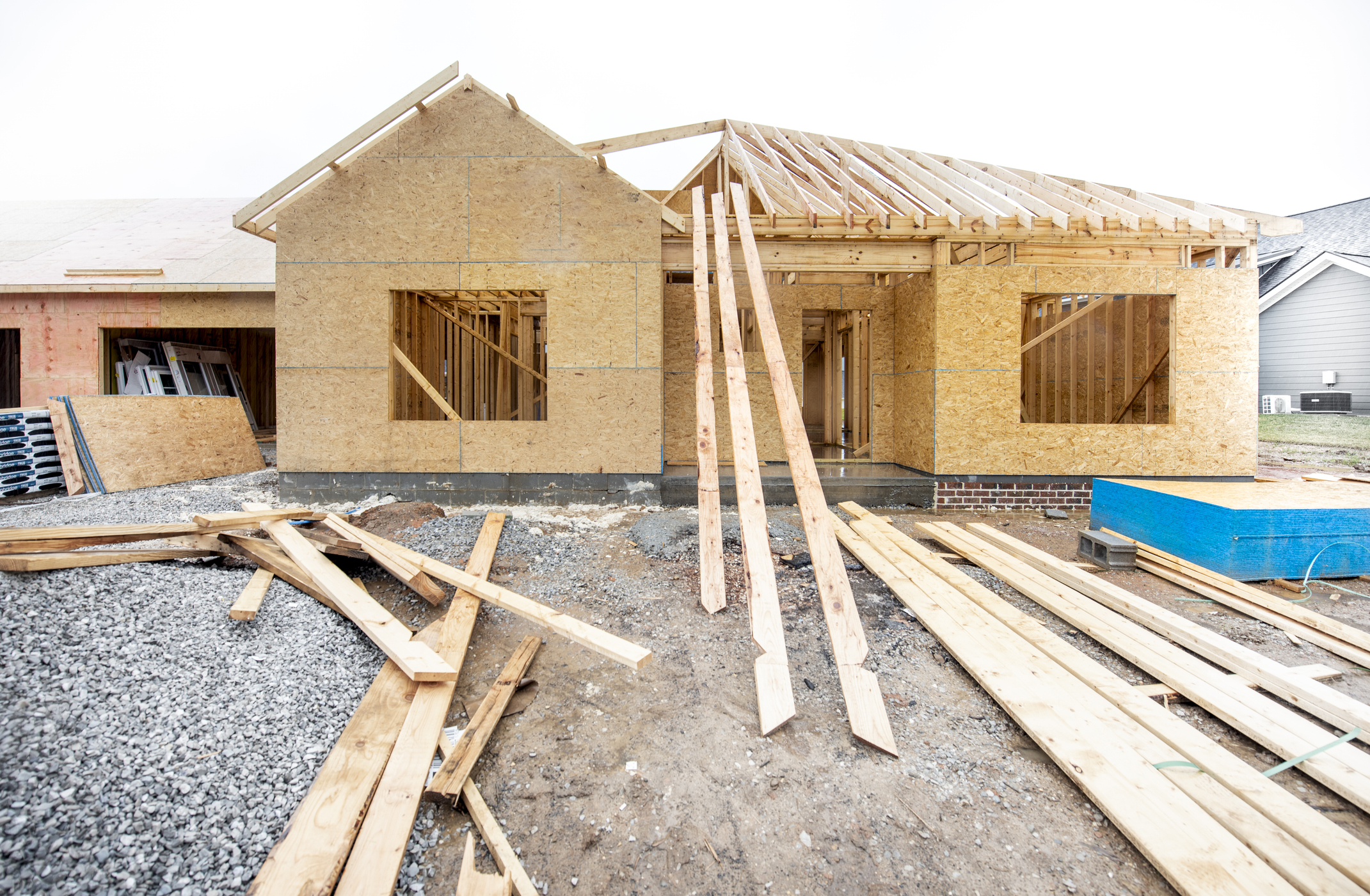
Geopolitical unrest impacts the physical reality of real estate through the lens of petro-inflation. The construction industry is one of the most energy-intensive sectors of the global economy. When regional conflicts threaten major transit points like the Strait of Hormuz, Brent crude often exceeds the $79 per barrel mark. This does not just increase the cost of transporting materials; it fundamentally changes the price of the materials themselves.
Real estate construction costs during conflict become highly sensitive to oil-based products. Asphalt used for paving, vinyl used in siding and flooring, and the massive amounts of energy required to manufacture cement all see immediate price hikes. According to our analysis, strategies for real estate investors facing high oil-based construction costs must include "cost-plus" contracts or significant contingency reserves—often 15% to 20% higher than historical norms.
Sidebar: Construction Material Vulnerability
- Asphalt & Vinyl: Derived directly from petroleum products. Highly sensitive to Middle East supply disruptions.
- Cement: Producing one ton of cement requires nearly 5 million BTUs of energy. Rising global energy prices hit this sector first.
- Steel: Geopolitical trade barriers and energy costs in smelting make steel a high-risk commodity during international disputes.
Evaluating real estate supply chain risks during middle east unrest is no longer optional for developers. Project delays are often more costly than the material price increases themselves. If a shipment of specialized HVAC components or high-end finishes is stalled due to maritime insecurity, those carrying costs can erode the entire profit margin of a multi-family development.
Portfolio Rebalancing: Moving to Neutral Hubs and REITs
To ensure wealth preservation, institutional and private investors are increasingly looking toward property diversification into neutral hubs like Singapore and Switzerland. These jurisdictions have historically acted as safe havens because their political neutrality tends to shield them from the most aggressive economic sanctions and trade wars. In 2026, these hubs offer a relative stability that domestic markets, embroiled in shifting trade alliances, cannot match.
Rebalancing real estate portfolios amid rising global inflation fears involves a tactical shift between physical assets and liquid alternatives. While physical property offers a hedge against currency devaluation, it can become a "liquidity trap" during periods of extreme geopolitical tension. This is where real estate investment trusts (REITs) play a vital role. They provide a level of liquidity that allows for rapid asset allocation shifts that physical deeds simply do not permit.
| Feature | Physical Private Property | Publicly Traded REITs |
|---|---|---|
| Liquidity | Low (Months to sell) | High (Instant trade) |
| Control | Absolute management control | Third-party management |
| Volatility | Low (Smoothed valuations) | High (Market-correlated) |
| Transaction Cost | High (5-10% of value) | Low (Brokerage fees) |
| Risk Mitigation | Direct site security | Diversification across geography |
When assessing geopolitical real estate risk for private portfolios, the 60:20:20 institutional model is a strong benchmark. This suggests 60% in core domestic assets with strong underlying demand, 20% in gold or liquid commodities, and 20% in international neutral hubs. This structure ensures that even if one regional conflict causes localized cap rate expansion, the broader portfolio remains resilient.
Sector Winners and Losers: Data Sovereignty and Nearshoring
The 2026 market is defined by extreme sector divergence. While the office sector continues to struggle—with a projected 75% drop in completions—other sectors are thriving precisely because of geopolitical instability. Nearshoring, the practice of moving manufacturing and supply chain hubs closer to the end consumer to avoid international shipping disruptions, is driving unprecedented demand for domestic industrial and logistics space.
Data centers have also emerged as commercial real estate safe havens during international conflict. As nations move toward "data sovereignty," the need for localized, secure server farms has skyrocketed. We are seeing sustained growth of 8-10% in this sector. These assets are often backed by high-credit-tier tenants and long-term leases, providing a stable income stream that is relatively decoupled from the fluctuations of the residential housing market.
Recent data highlights the cautiousness of the global market. In a 2024 report by Knight Frank, 62% of investors identified geopolitical risk as a primary driver influencing their investment decision-making for real estate assets. This cautiousness was reflected in the numbers, as global transaction volumes for income-producing real estate experienced a 48% decline in 2023, falling to $615 billion as investors faced a combination of geopolitical uncertainty and rising interest rates.
Furthermore, the shift in cross-border investment is measurable. According to Savills, global foreign direct investment in 2023 and 2024 averaged 1.3% of GDP across the 20 largest recipient nations, marking the lowest level recorded since 1996. For the strategic investor, this means there is less international competition for high-quality domestic assets, but also a smaller pool of buyers when it comes time to exit a position.

FAQ
What is considered a geopolitical risk in real estate?
Geopolitical risk refers to the potential for international conflicts, trade wars, or political instability to disrupt property markets. This includes direct risks like physical damage to assets in conflict zones and indirect risks such as interest rate hikes, commodity price shocks, and shifts in foreign direct investment patterns.
How does geopolitical instability affect overseas property investments?
Instability often leads to currency volatility, making it difficult to repatriate profits or accurately value assets. It can also trigger regulatory changes, such as new taxes on foreign owners or restrictions on capital movement, which significantly impact the internal rate of return for cross-border investment projects.
How can investors mitigate geopolitical risk in their portfolios?
Investors can mitigate risk through geographical diversification, particularly into neutral hubs like Switzerland or Singapore. Additionally, maintaining a portion of the portfolio in more liquid assets like REITs or industrial real estate with nearshoring potential can provide a buffer against the illiquid nature of traditional residential or office properties.
Is real estate a safe haven during geopolitical crises?
Historically, real estate is viewed as a hedge against inflation, which often accompanies geopolitical crises. However, its status as a safe haven depends on the sector and location. While gold or Treasury bonds are more liquid, high-quality real estate in stable jurisdictions provides wealth preservation through tangible value and consistent rental income.
How do global conflicts affect domestic commercial real estate?
Global conflicts primarily affect domestic markets through the supply chain and capital markets. Increased costs for energy and materials drive up construction and operating expenses. Simultaneously, global uncertainty can cause a contraction in credit markets, making it more expensive for commercial owners to refinance existing debt, leading to potential cap rate expansion.