Quick Facts
- Current Rating: BBB (S&P Global Ratings) with a Negative Outlook
- Strategic Leverage: 4.0x Debt-to-EBITDA estimated at the close of 2025
- Recovery Target: 3.9x leverage ratio benchmarked for fiscal year 2026
- Transaction Cost: $14.1 billion acquisition price for U.S. Steel
- Capex Commitment: $11 billion in mandatory investments by 2028
- Market Divergence: S&P BBB rating vs. domestic JCR AA+ rating
S&P Global Ratings currently maintains a BBB rating for Nippon Steel, but the status is under pressure with a negative outlook. This reflects rising leverage concerns following the US Steel acquisition and high capital expenditures. While the company retains its investment-grade status for now, a projected debt-to-EBITDA ratio of approximately 3.9x in fiscal 2026 suggests that the rating remains sensitive to any further delays in financial recovery or shifts in the global steel market.
The Leverage Leap: Why the BBB Rating is Under Pressure
In the world of credit analysis, balance sheet flexibility is the ultimate buffer against market volatility. For years, Nippon Steel operated with a conservative financial profile that allowed for significant maneuverability. However, the decision to pursue a massive international expansion has fundamentally altered its credit profile. S&P Global Ratings downgraded Nippon Steel's credit rating from BBB+ to BBB in July 2025 and maintained a negative outlook through May 2026, citing the financial burden of the acquisition.
The quantitative shift is stark. Nippon Steel leverage increased from 1.6x in fiscal year 2024 to 4.0x at the end of fiscal year 2025 following the completion of the transaction. This spike in the leverage ratio places the company at the very edge of what constitutes a stable BBB investment grade threshold. When a company moves from a position of relative comfort to a 4.0x debt-to-EBITDA ratio, the margin for operational error disappears. For institutional investors conducting a bond investment risk assessment, this transition signals a move from a "buy-and-hold" defensive asset to a "credit-watch" exposure.
| Metric | FY 2024 (Actual) | FY 2025 (Estimated) | FY 2026 (Target) |
|---|---|---|---|
| Debt-to-EBITDA Ratio | 1.6x | 4.0x | 3.9x |
| Net D/E Ratio | 0.5 | 0.9 | 0.7 |
| Interest Coverage Ratio | 8.5x | 3.2x | 3.5x |
| Free Operating Cash Flow | Positive | Deficit | Neutral |
The company has clearly stated a goal to bring its debt-to-EBITDA ratio down to 3.9x. While a 0.1 improvement might seem marginal, in the context of global steel markets, it represents a significant commitment to deleveraging through earnings growth and asset optimization. However, the interest coverage ratio, which measures the ease with which a company can pay interest on its outstanding debt, is also under scrutiny. If earnings fluctuate due to softening steel demand in Asia, the ability to service this new debt load becomes the primary focal point of the Nippon Steel rating analysis.
US Steel Integration and the Capex Challenge
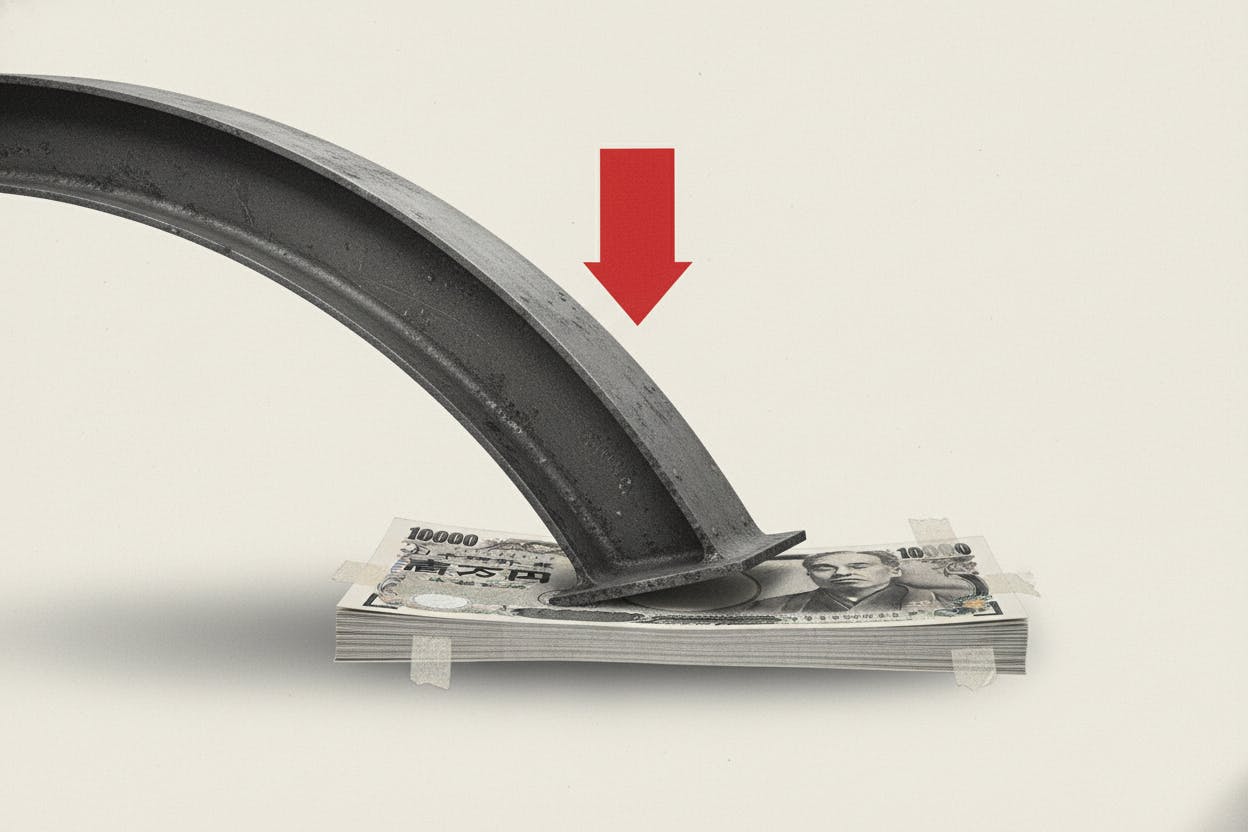
Strategic acquisitions are rarely just about the purchase price; the long-term operational costs often represent the true financial risk. For Nippon Steel, the $14.1 billion price tag is just the beginning. The integration of U.S. Steel brings with it a commitment of $11 billion in capital expenditure through 2028. This reinvestment is necessary to modernize aging American facilities and align them with Nippon Steel's global standards for efficiency and decarbonization.
This massive capital outlay creates a structural headwind for cash flow. Analysts currently project a Nippon Steel free operating cash flow deficit management challenge of 200-300 billion yen in the near term. For a BBB rated entity, consistent negative cash flow is a red flag for credit agencies. The primary financial risk is that the company might be forced to issue more debt to cover operational improvements, creating a feedback loop where debt servicing capacity is stretched thin just as the industry enters a cyclical downturn.
Furthermore, the operational flexibility of the combined entity is constrained by social and political agreements. The US National Security Agreement (NSA) and commitments to labor unions limit the company’s ability to aggressively cut costs or shutter underperforming assets in the United States. This means that Nippon Steel must rely almost entirely on top-line growth and efficiency gains rather than traditional synergy-based cost-cutting to manage its US Steel acquisition financial risk for Nippon Steel. For bondholders, this lack of flexibility increases the probability of a credit rating downgrade impact if the global steel market remains stagnant.
Stability Factors: Why a Downgrade to Junk is Unlikely
Despite the clear stress on the balance sheet, there are significant mitigating factors that suggest Nippon Steel will successfully defend its investment grade status. The most critical of these is the company's relationship with the Japanese financial ecosystem. To support its financial position, Nippon Steel raised 800 billion yen through subordinated loans, which credit agencies like S&P treat as 50% debt and 50% equity. This "hybrid" financing provides a liquidity cushion that a purely debt-funded deal would not.
The bond maturity profile of the company is also exceptionally well-managed. Nippon Steel has staggered its maturities, with some instruments extending as far as 2080, and maintains an average interest rate on long-term borrowings of approximately 1.1%. This low cost of capital is a distinct advantage of being a Japanese national champion. Even as the market prepares for potential yield spread widening, Nippon Steel's interest expense remains far lower than its American or European peers.
| Agency | Current Rating | Outlook | Focus Area |
|---|---|---|---|
| S&P Global | BBB | Negative | Global leverage & US integration |
| Moody's | Baa2 | Stable | Operational scale & cash flow |
| JCR (Domestic) | AA+ | Stable | National importance & bank support |
Comparing Nippon Steel S&P rating vs domestic JCR rating reveals a fascinating gap in perspective. While international agencies focus on raw leverage ratios and the US Steel integration risk, domestic Japanese agencies like JCR prioritize the company's vital role in the Japanese economy and its deep-rooted support from mega-banks. This domestic support acts as a "floor" for corporate solvency, ensuring that refinancing risks for Nippon Steel 2026 bond maturities are minimized. As long as Japanese banks remain willing to provide low-interest subordinated loans, the risk of the company falling into high-yield (junk) territory remains extremely low.
Navigating the 2026 Transition
As we look toward the fiscal 2026 horizon, the path for Nippon Steel is narrow but visible. The company must execute a perfect balancing act: completing the integration of U.S. Steel, meeting decarbonization targets, and reducing its debt-to-EBITDA from 4.0x back toward its historical norms. Any major disruption—be it a deeper slowdown in the Chinese property market affecting global steel prices or further regulatory delays in the U.S.—could trigger an S&P move from BBB to BBB-.
For the sophisticated investor, the Impact of S&P negative outlook on Nippon Steel funding costs is already being priced in. Credit spreads have widened slightly compared to the pre-acquisition era, reflecting the new reality of a higher-leverage profile. However, the company's proactive management of its financial flexibility suggests that it views its BBB rating as a temporary "floor" rather than a permanent destination. The successful execution of its 3.9x leverage target by 2026 will be the ultimate signal that the company has successfully digested its largest acquisition in history without compromising its long-term credit health.
FAQ
What is the current credit rating of Nippon Steel?
Nippon Steel currently holds a BBB credit rating from S&P Global Ratings and a Baa2 rating from Moody's. While these ratings are investment grade, they are currently accompanied by a negative outlook from S&P, reflecting the increased financial risk associated with its recent capital-intensive acquisitions.
Is Nippon Steel's credit rating investment grade?
Yes, a BBB rating from S&P Global and a Baa2 rating from Moody's both fall within the investment grade category. This classification allows the company to access broad capital markets and keep its funding costs lower than companies in the high-yield or junk category, although the current negative outlook suggests that the rating is under pressure.
What is the S&P credit rating for Nippon Steel?
The specific S&P Global rating for Nippon Steel is BBB. This rating was lowered from BBB+ in mid-2025 due to concerns regarding the company’s rising leverage and the heavy capital expenditure requirements of the U.S. Steel transaction.
Has Nippon Steel's rating been downgraded recently?
Yes, S&P Global Ratings downgraded Nippon Steel from BBB+ to BBB in July 2025. This downgrade was a direct response to the company taking on significant new debt to finance its $14.1 billion acquisition of U.S. Steel, which pushed its leverage ratio significantly higher than historical levels.
What is the outlook for Nippon Steel's credit rating?
The current outlook for the Nippon Steel rating is negative. This indicates that credit agencies are closely monitoring the company's ability to integrate its new assets and reduce its debt over the next 12 to 18 months. An upgrade or return to a stable outlook is dependent on the company meeting its 2026 leverage reduction targets.