Quick Facts
- Market Consensus: Financial markets have fully priced in a 25-basis-point interest rate hike for the June meeting.
- Current Policy Rate: The deposit facility rate currently stands at 2.00%, projected to hit 2.25%.
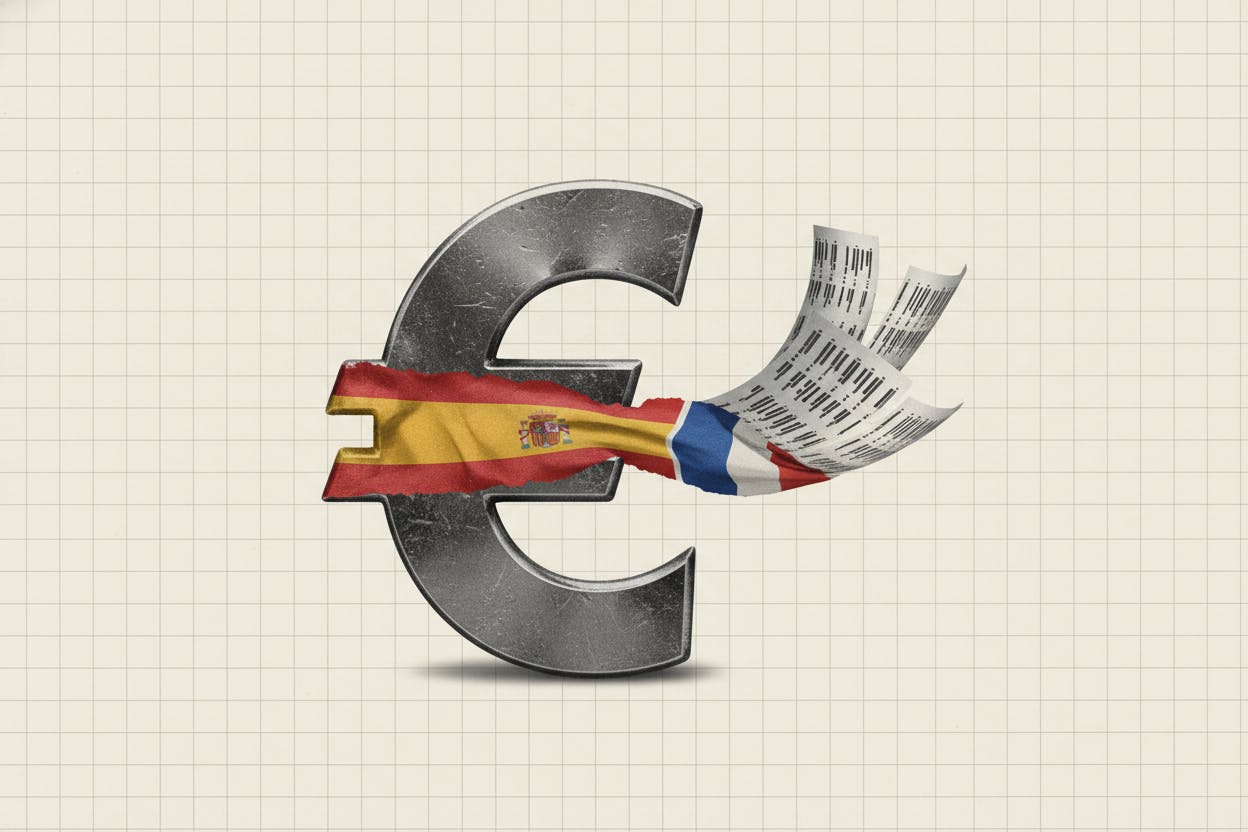
- Inflation Heat Map: Sticky price growth in Spain (3.2%) and France (2.4%) is fueling hawkish Eurosystem sentiment.
- Investor Sentiment: Markets are now pricing in cumulative interest rate hikes of 73 basis points for the rest of 2026.
- Strategic Pivot: Focus has shifted toward front-end rate market trends to mitigate duration risk.
- Meeting Date: The Governing Council will convene on June 11, 2026.
The European Central Bank is widely expected to implement an ECB rate hike in June 2026, with market-implied probability reaching 93%. Driven by stubborn inflation in Spain and France, this move has bond investors repositioning portfolios to manage fixed-income volatility and shifting front-end rate market trends. Specifically, the European Central Bank is expected to implement an interest rate increase to 2.25% to combat persistent Eurozone inflation following data-dependent signals from the Governing Council. Preliminary inflation reports show price levels holding at 3.2% in Spain and rising to 2.4% in France, reinforced by energy price volatility. Markets currently factor in a high probability of a 25-basis-point hike as officials aim to anchor inflation near the 2% target.
Strategic Context: The June 11 Decision
As we approach the mid-year point, the narrative within the Eurozone fixed-income space has shifted from "if" to "how much further." Long-term investors must look beyond the immediate headline and understand the structural pressures forcing the hands of policy makers. While the Q1 GDP growth was a stagnant 0.1%, the mandate remains clear: price stability above all else. This June decision is not merely a reaction to current data but a calculated attempt at inflation anchoring to prevent inflation expectations from becoming unmoored in the 2027–2028 horizon.
The decision-making process within the Governing Council has been increasingly dominated by the concern that core inflation is proving more "sticky" than transitory. This has created a bifurcated reality for bond holders where the safety of sovereign debt is being questioned by the reality of eroding real yields.
Investor Note: Navigating this period requires a move away from passive indexing. Tactical positioning for front-end rate market trends is essential as the slope of the yield curve reacts to the impending policy tightening.
The Inflation Catalyst: Why June is Inevitable
The primary driver for the June ECB rate hike is the persistence of regional inflation data that refuses to align with the central bank’s 2% objective. In April 2026, Eurozone headline inflation was reported at 3.0%, and despite hopes for a cooldown, economists are now projecting a further increase to 3.4% in May due to persistent energy price shocks.
Isabel Schnabel and other key members of the Governing Council have adopted an increasingly hawkish stance, emphasizing that waiting too long to act could necessitate a more aggressive—and economically damaging—tightening cycle later. This "insurance hike" narrative is gaining traction. Officials argue that a 25-basis-point move now serves as a hedge against the impact of French and Spanish inflation on euro bond selection, ensuring that the market does not perceive the bank as being "behind the curve."
The transition from external energy shocks to "second-round effects"—where higher costs begin to bake into wages and service prices—is the ultimate red flag for bond investors. When analyzing the impact of ECB data dependency on euro bond investment decisions, one must recognize that the central bank is no longer prioritizing growth support; it is entirely focused on monetary policy tightening to restore its credibility.
Market Impact: EURIBOR vs Bunds Divergence
The anticipation of the June meeting has triggered a distinct divergence within the Eurozone rate complex. Instruments tied to short-term expectations, such as EURIBOR futures and Overnight Index Swaps (OIS), are bearing the brunt of the immediate volatility. This is a classic example of front-end rate market trends reacting to immediate policy shifts while the long end—represented by 10-year German Bunds—remains somewhat anchored by long-term growth concerns.
As investors price in a terminal rate potentially reaching 2.50% by year-end, we are observing a significant yield curve flattening. The premium for holding longer-dated debt is shrinking because the market expects the ECB rate hike to eventually dampen long-term economic activity.
| Metric | Front-End (EURIBOR/Short-Dated) | Long-End (German Bunds) |
|---|---|---|
| Sensitivity | High sensitivity to June policy shift | Lower sensitivity; driven by growth outlook |
| Current Trend | Rising yields as markets price in 73bps cumulative hikes | Resilience near current levels; curve flattening |
| Market Tool | OIS and 2-Year Schatz | 10-Year to 30-Year Sovereigns |
| Primary Risk | Immediate refinancing costs/volatility | Long-term stagflation and term premium |
For those developing EURIBOR vs Bunds strategies for euro bond investors, the play has been to decrease exposure to the 2-year and 5-year segments of the curve, where the repricing of the deposit facility rate is most violent. Meanwhile, the use of short-dated government bonds has become a tactical necessity for those seeking to park liquidity without being exposed to the duration risk of the 10-year plus segment.
Investor Strategies: Managing Fixed-Income Volatility
In an environment defined by monetary policy tightening, the traditional "buy and hold" bond strategy is under siege. Managing fixed-income volatility during ECB rate hikes requires a proactive approach to portfolio construction.
- Adjusting Duration Portfolio-Wide: Reducing the weighted average duration of a bond portfolio can provide a buffer against rising yields. By focusing on shorter maturities, investors can reinvest matured proceeds into higher-yielding paper as the ECB raises its deposit facility rate.
- Utilizing Floating Rate Notes (FRNs): These instruments are particularly effective for hedging against interest rate risk. Because the coupons on floating rate notes for rising euro interest rates reset periodically based on benchmark rates like EURIBOR, they maintain their par value better than fixed-rate bonds when rates climb.
- Tactical Hedging with OIS: Sophisticated investors are increasingly using Overnight Index Swaps to hedge their exposure. By locking in rates via swaps, institutional players can manage the "layer cake of shocks" stemming from unpredictable energy prices and geopolitical shifts.
- Monitoring Regional Divergence: Not all Eurozone debt is equal. Investors should pay close attention to the spread between periphery bonds (like Italy or Spain) and the German Bund. While a June ECB rate hike is broad-based, the impact on debt sustainability in higher-debt nations can lead to sudden spread widening, providing both risks and opportunistic entry points.
The ultimate goal for the remainder of 2026 is managing fixed-income volatility while ensuring the income component of the portfolio remains resilient against inflation.
Strategic Fact Box: Eurozone Economic KPIs (June 2026 Projection)
| Indicator | Value / Date |
|---|---|
| ECB Meeting Date | June 11, 2026 |
| Projected Deposit Rate | 2.25% |
| April 2026 Headline CPI | 3.0% |
| Spanish CPI (May Est.) | 3.2% |
| Q1 2026 GDP Growth | 0.1% |
| Market Implied Hike Prob. | 93% |
Strategic Outlook: The Path Beyond June
While the June ECB rate hike appears to be a certainty, the "meeting-to-meeting" approach adopted by the Governing Council means that the second half of 2026 remains a landscape of uncertainty. Investors should look for specific language in the post-meeting press conference regarding "terminal rates."
If the bank suggests that the June hike is a "one-and-done" insurance policy, we may see a snapback in bond prices. However, if the rhetoric emphasizes the need for restrictive policy until inflation anchoring is fully achieved, we should prepare for a sustained period of yield curve flattening and potential volatility in the EURIBOR markets.
For long-term investors, the focus remains on protecting the real value of capital. In this high-inflation, rising-rate environment, the margin for error in duration management has narrowed significantly. Staying data-dependent—just like the ECB—is the only way to navigate the coming months successfully.
FAQ
When is the next ECB interest rate decision?
The next high-stakes interest rate decision from the European Central Bank is scheduled to take place on June 11, 2026. This meeting is critical as the Governing Council will assess the latest inflation prints from May to confirm whether a 25-basis-point increase is necessary to maintain price stability across the Eurozone.
Why is the European Central Bank raising interest rates?
The European Central Bank is raising interest rates primarily to combat persistent inflation that remains well above the 2.0% medium-term target. Current drivers include stubborn energy price shocks and higher-than-expected price growth in core economies like Spain and France, which threaten to embed inflation into the broader economy through second-round effects.
How do higher ECB rates help reduce inflation?
Higher interest rates help reduce inflation by increasing the cost of borrowing for consumers and businesses. This tends to cool spending and investment, thereby reducing the total demand for goods and services. Lower demand puts downward pressure on price increases, helping the ECB achieve its goal of inflation anchoring near the 2% mark.
What is the current ECB interest rate?
As of early June 2026, the ECB deposit facility rate stands at 2.00%. However, with a June ECB rate hike almost fully priced in by the financial markets, this rate is widely expected to rise to 2.25% following the conclusion of the upcoming Governing Council meeting.
How do ECB rate hikes impact the value of the Euro?
Generally, when the ECB raises interest rates relative to other central banks, it can increase the value of the Euro. Higher rates offer better returns for investors holding Euro-denominated assets, which increases demand for the currency. However, if the rate hike is seen as a risk to economic growth, the currency's gains may be tempered by concerns regarding a potential slowdown.