Quick Facts
- The 4.75% Threshold: Financial analysts have identified the 4.75% mark on the 10-year Treasury as a major algorithmic trigger for structural tech sell-offs and sector rotation.
- Thirty-Year Highs: The return of fixed income as a competitor for capital is evidenced by the 30-year U.S. Treasury yield, which reached 5.18%, a level not seen in nearly two decades.
- Corporate Debt Load: Major technology leaders, including Alphabet and Microsoft, issued approximately $100 billion in bonds in 2025 to fund massive capital expenditures, doubling their debt issuance from the previous year.
- Concentration Risk: Market stability remains fragile as roughly 87% of S&P 500 gains continue to be driven by a small group of AI leaders sensitive to rate spikes.
- Valuation Ceiling: Higher discount rates mathematically lower the present value of future earnings, meaning AI firms need 13% to 15% above-trend growth just to maintain their current stock prices.
- The Gravity Effect: Rising yields act as a gravity machine, pulling down the price-to-earnings multiples of growth companies as the risk-free rate becomes more attractive to institutional investors.
Will the bond market halt the current AI stock market rally? As the 10-year Treasury yield approaches critical thresholds, AI stock valuations are facing a mathematical reality check. Understanding the impact of Treasury yields on tech stocks is essential for investors navigating the volatility of 2026, as the rising risk-free rate reshapes the landscape for high-duration assets.
The Gravity Machine: Why Yields Squash AI Stock Valuations
Every stock valuation is ultimately a prediction of the future. When you buy a high-growth tech company, you are paying for cash flows that might not reach their full potential for five, ten, or even twenty years. This makes them high-duration assets, just like long-term bonds. In the world of finance, we use a discounted cash flow model to figure out what those future dollars are worth today. The most important variable in that equation is the discount rate, which is heavily influenced by government bond yields.
When the yield on government debt rises, the math changes instantly. If you can get a guaranteed 5% return from the government, you will naturally demand a much higher return from a risky AI startup. This creates a valuation ceiling. Even if a company like NVIDIA or Microsoft reports stellar earnings, their stock price might still fall if the discount rate pushes their valuation multiples lower. Evaluating AI stock valuations using current discount rates is no longer just an academic exercise; it is a survival skill for the modern portfolio manager.
The following table illustrates how sensitive a stock's price-to-earnings (P/E) ratio is to changes in the prevailing interest rate. This represents the theoretical maximum an investor should pay assuming a constant growth rate.
| Interest Rate (Risk-Free Rate) | Theoretical P/E Multiple Ceiling | Impact on Growth Strategy |
|---|---|---|
| 1% | 50.0x | Explosive growth, high speculation |
| 3% | 33.3x | Moderate growth, focus on profitability |
| 5% | 20.0x | Value-oriented, high pressure on earnings |
As we move into a higher-for-longer interest rate era, the equity risk premium—the extra return investors demand for holding stocks over bonds—starts to thin out. This often leads to a sector rotation where money flows away from expensive software providers and into cash-rich, defensive sectors. For those of you holding a tech-heavy portfolio, the impact of 10-year Treasury yield on AI growth stock prices is the single most important metric to watch this quarter.
Portfolio Strategy Tip: When yields rise, focus on the PEG ratio (Price/Earnings to Growth). A company with a high P/E is only defensible if its growth rate is significantly higher than the discount rate plus the risk premium.
Auction Watch: US Treasury Impacts on Market Valuations
While many investors focus on the Federal Reserve's speeches, the real action often happens at the US Treasury auctions. This is where the government sells its debt to the public. If global demand for these bonds is soft, the government must offer a higher yield to attract buyers. This results in an increase in the term premium—the extra compensation investors require for the risk of holding debt over a long period.
US Treasury auction influence on market valuations is direct and often immediate. In 2026, the sheer volume of debt being issued to fund government spending has reached levels that the market is struggling to absorb. When an auction goes poorly, yields spike. Because big tech companies are now significant borrowers themselves, issuing billions to build out data centers, their cost of capital rises alongside the government’s. Using US Treasury auction results as AI stock market indicators can provide a 48-hour head start on major market shifts.
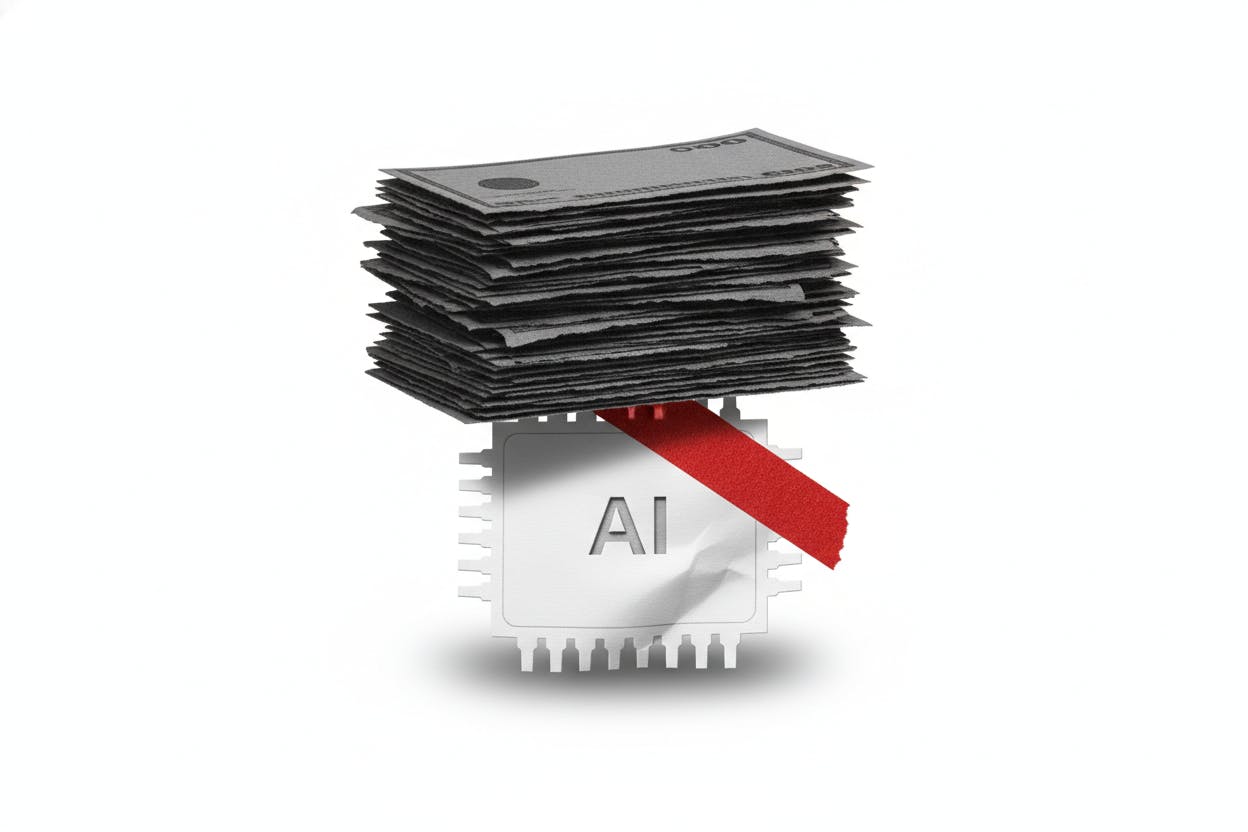
We have seen a notable shift in real yields—the yield after adjusting for inflation. When real yields rise, market liquidity tends to dry up. This is particularly dangerous for the technology sector because so much of the recent rally has been fueled by easy access to credit and high levels of institutional liquidity. If the bond market demands a higher "rent" for money, the capital flowing into AI infrastructure and speculative stock purchases will naturally slow down.
The 4.75% Trigger: Identifying Market Tripwires
In the world of quantitative trading, symbols and numbers often act as psychological and mechanical triggers. Many hedge funds and algorithmic trading platforms have set 4.75% on the 10-year Treasury as a structural tripwire. If the yield stays above this level for more than a few days, it often triggers automatic sell orders in growth-heavy indices like the Nasdaq 100.
Investors should monitor these technical resistance zones closely. Just as the Dow Jones 50,000 marks a significant psychological milestone for the broader market, the 5% barrier on long-term debt marks a zone of potential panic. When yields hover near these levels, the market breadth—the number of individual stocks participating in the rally—often narrows. Currently, we see a divergence where only a small percentage of stocks are making new 52-week highs, even as the main indices stay near records. This is a classic sign of a fragile market that is vulnerable to a bond market shock.
The yield curve is also signaling caution. An inverted or flat yield curve suggests that while the market expects growth in the short term, the long-term outlook is clouded by the weight of high borrowing costs. For the AI rally to continue, these companies must prove they can generate enough cash to outpace the rising cost of their own debt. If they cannot, the 4.75% trigger could be the start of a broader re-rating of the entire sector.
Strategic Defense: Investing in AI Stocks During Bond Market Volatility
How do you protect your gains without exiting the AI trade entirely? The answer lies in identifying AI companies with strong cash flows to survive high rates. We are moving out of the "hope" phase of AI investment and into the "execution" phase. In this environment, you want to own the "Quality Tech" firms—those with fortress balance sheets, high profit margins, and the ability to raise prices even when inflation is sticky around 3.4%.
Investing in AI stocks during bond market volatility requires a shift in mindset. Instead of looking for the next unproven startup, look for established providers that are integrated into the enterprise workflow. These companies have pricing power, meaning they can pass increased costs on to their customers, preserving their margins even as their own borrowing costs rise.
- Seek Low Debt-to-Equity: Prioritize firms that are self-funding their AI research rather than relying on the bond market.
- Monitor Free Cash Flow: During periods of high discount rates, cash available today is worth significantly more than the promise of cash in five years.
- Diversify Internationally: Consider allocation to markets where the central banks might be on a different path, providing a hedge against domestic rate spikes.
- Hedge Your Position: Hedging AI stock positions against bond market volatility can be done through inverse bond ETFs or by moving into short-duration value stocks during yield spikes.
Ultimately, long-term AI investment strategies for a higher-for-longer interest rate era must account for a more disciplined valuation environment. The days of "growth at any cost" are over. The new regime rewards efficiency, sustainable scaling, and a healthy respect for the bond market’s influence.
FAQ
Are AI stocks currently overvalued or in a bubble?
Valuation is relative to interest rates. While many AI companies have P/E ratios that look high by historical standards, they are supported by unprecedented earnings growth. However, if bond yields continue to rise toward 5.5% or 6%, those same valuations could quickly be classified as a bubble because the discount rate would make them mathematically unsustainable. Currently, the market is in a "high-valuation" zone that requires perfect execution to avoid a correction.
What are the key drivers of AI stock valuation?
The primary drivers are corporate earnings growth, the pace of AI enterprise adoption, and the risk-free rate provided by US Treasuries. Secondary factors include the cost of capital for infrastructure—such as chips and data centers—and the general level of liquidity in the financial system. When these drivers align, valuations expand; when they conflict, as they do now with rising yields, valuations face downward pressure.
Is the current AI market trend sustainable?
The trend is sustainable as long as AI technology leads to measurable productivity gains for the broader economy. If companies using AI see higher margins and lower costs, they will continue to spend on the technology, supporting the revenues of the AI leaders. The risk to sustainability is not the technology itself, but the macro-financial environment—specifically if rising government debt crowds out private investment.
What are the risks of investing in high-growth AI stocks?
The main risks include interest rate sensitivity, concentration risk, and capital expenditure overstretch. Because the rally is led by just a few names, a disappointment from one leader can pull down the entire sector. Additionally, the massive $100 billion debt taken on by tech firms in 2025 creates a higher bar for success, as those loans must eventually be serviced at higher interest rates.
How to identify undervalued AI stocks?
Look for companies where the market has not yet priced in the efficiency gains of AI. Focus on "secondary" players—software firms or traditional industries that are using AI to radically improve their existing business models—rather than just the companies building the chips. Use the PEG ratio to identify firms where the growth rate is higher than the P/E multiple, especially those with minimal debt on their balance sheets.